
Casco Histórico
Calle Mayor, colleges and storks on every tower
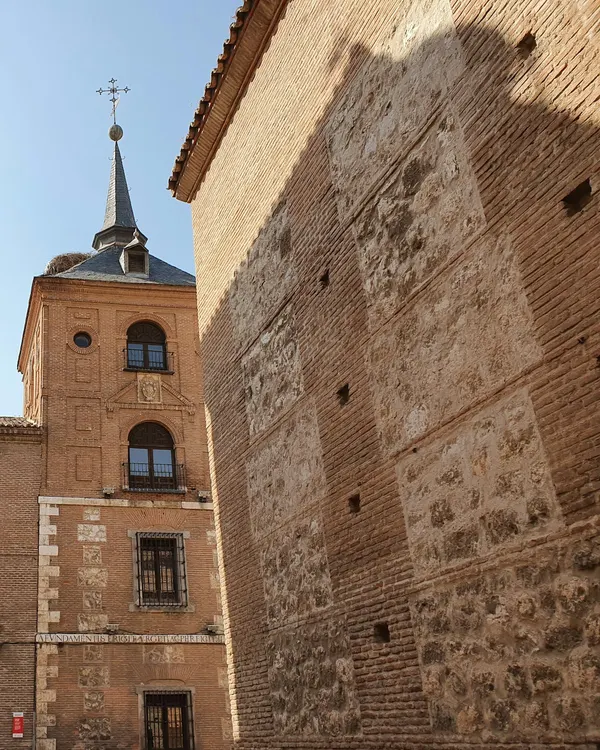
Alcalá's old town is a rare thing: a complete university city planned in the sixteenth century, with colleges, convents and churches laid out around streets that still serve students today. The Colegio Mayor de San Ildefonso, with its Plateresque façade, remains the university's ceremonial heart, and the Plaza de Cervantes, with its bandstand and statue of the writer, is where the town meets. From there the Calle Mayor, one of the longest arcaded streets in Spain, runs past the house museum on the site of Cervantes' birthplace towards the cathedral.
Housing here is mostly in apartment blocks squeezed between historic buildings, with some restored older houses and flats above shops on the arcaded streets. Shared flats are common because many faculties, including humanities, law and economics, are in the centre, so students can walk to class in minutes. Some buildings have no lift and older flats can be cold in winter, so ask about heating and insulation. Streets with tapas bars are lively at weekends and during the Semana Cervantina in October, when the town celebrates its most famous son.
Living centrally means you can do without a car: shops, markets, cinemas and the Corral de Comedias, one of the oldest surviving playhouses in Europe, are on foot, and the main Cercanías station is within walking distance for trains to Madrid. Science and health students face a short train or bus ride to the campus on the outskirts. For newer flats and a quieter routine, look at Espartales; for the fastest trains to Madrid, consider La Garena.
Getting around A walk to the main Alcalá de Henares Cercanías station for trains to Madrid, with city buses and trains to the science campus and outer districts.