Skip to content
FlatHunt Search Cologne

Cologne · neighbourhood guide

Where to live in Cologne: a neighbourhood guide

Cologne residents identify strongly with their Veedel, and each one has a distinct character. Students cluster in Sülz and around Zülpicher Straße near the university, creatives and night owls head to Ehrenfeld, professionals pay for the Altbau of the Belgian Quarter, and the Südstadt keeps old Cologne traditions alive. Across the Rhine, Deutz offers some of the best rail links in the city. Each profile below covers housing, atmosphere, green space and transport.

Cologne, Germany

Ehrenfeld

Former factory district turned creative and multicultural hub

  • students
  • creatives
  • nightlife
  • young professionals

Ehrenfeld began as an industrial suburb west of the railway, full of factories, workshops and workers' housing, and that past still shapes the district. The Helios tower, a lighthouse-like landmark of a former electrical factory, rises above the rooftops, and many old industrial halls now hold clubs, rehearsal rooms, studios and offices. The main street, Venloer Straße, runs for kilometres through the district, lined with Turkish bakeries, greengrocers, bars, vintage shops and cafés. At its eastern end the Cologne Central Mosque, with its concrete-and-glass dome, marks the edge of the inner city.

Getting around Stadtbahn lines 3 and 4 run along Venloer Straße to the centre, line 13 follows the Gürtel, and Köln-Ehrenfeld station has S-Bahn and regional trains.

Living in Ehrenfeld · 31 furnished homes

Belgian Quarter

Boutiques, Brüsseler Platz and Altbau inside the Ring

  • young professionals
  • creatives
  • car-free living

The Belgian Quarter, or Belgisches Viertel, lies just west of the Ring between Aachener Straße and Venloer Straße, and gets its name from streets called after Belgian cities: Brüsseler Straße, Antwerpener Straße, Lütticher Straße and others. It was built in the late nineteenth century as part of the Neustadt, the ring of new districts laid out when Cologne's medieval walls came down, and much of the Altbau housing survived. Tall townhouses with stucco façades and high ceilings line the streets, many of them divided into apartments.

Today the quarter is Cologne's centre for independent fashion, design shops, galleries, coffee bars and restaurants. Brüsseler Platz, with the Church of St. Michael in the middle, is its social heart: on warm evenings the square fills with people sitting on the steps and pavements, which has led to long-running debates about noise. The Stadtgarten, one of Cologne's oldest parks, sits on the northern edge with a well-known jazz venue, and the Aachener Weiher lake and the inner green belt are a short walk west.

Living here means being central: the Ring, the shopping streets around Ehrenstraße and the old town are all within walking distance. That convenience makes the quarter one of the most sought-after addresses in the city, and flats rarely stay on the open market for long. Furnished apartments and studios on fixed-term contracts suit professionals, interns at media companies and people who want to experience central Cologne before committing. If you need a quiet bedroom, avoid the streets immediately around Brüsseler Platz.

Getting around Friesenplatz and Rudolfplatz on the Ring are the nearest Stadtbahn hubs, with lines across the city, and the old town is a walk east.

Search homes in Cologne

Sülz

Student favourite next to the university and the Stadtwald

  • students
  • medical staff
  • young families
  • runners

Sülz is the residential district closest to the University of Cologne, and for generations it has been the natural home of students who prefer a bike ride over a train journey to lectures. The main university buildings on Albertus-Magnus-Platz and the university hospital in neighbouring Lindenthal are a short walk or cycle away, and the Zülpicher Straße, heart of the student quarter known as the Kwartier Latäng, leads straight into the city. Streets of Altbau apartment houses alternate with post-war buildings, and many flats are shared by students.

Daily life centres on Berrenrather Straße and Zülpicher Straße, with bakeries, organic shops, cafés and small restaurants. Sülz is also a family district, with schools and playgrounds, so it is busy during the day but generally calm in the evening. Green space is one of its strongest points: the Beethovenpark lies to the south, and the inner green belt, the Stadtwald and the Decksteiner Weiher are within reach for running, cycling and summer picnics. Weekly markets add to the village-like feel of the neighbourhood.

Rooms in shared flats are the most common housing for students, and competition is strong before the winter semester. Furnished rooms and studios from rental platforms offer a way in, often on fixed-term contracts that suit exchange students and medical interns. Larger Altbau apartments are popular with young families and academics. Sülz is a good choice for anyone studying at the university, working at the hospital or wanting a calm, green base without moving to the suburbs. Ask early, because rooms here are often passed on between friends.

Getting around Stadtbahn line 9 runs through Sülz and past the university to Zülpicher Platz and the centre, and line 13 starts at Sülzgürtel and follows the Gürtel north.

Search homes in Cologne

Südstadt

Chlodwigplatz, the Volksgarten and Rhine harbour views

  • students
  • young professionals
  • carnival fans

The Südstadt is Cologne at its most traditional. It covers the area south of the old town around Severinstraße, one of the city's oldest streets, and Chlodwigplatz, where the medieval Severinstorburg gate still stands. Corner pubs serving Kölsch, small shops and long-established bakeries give the streets a strong local identity, and carnival here is something residents prepare for all year. The neighbourhood is dense with Altbau and post-war apartment buildings, many with small balconies overlooking busy streets.

The district also has two very different green and waterfront sides. The Volksgarten, a large park with a lake, beer garden and lawns, is a favourite for summer afternoons, and the Römerpark and the streets around it offer quieter corners. To the east, the Rheinauhafen, a former harbour, has been redeveloped with offices, apartments and the three crane-shaped Kranhäuser buildings, and the riverside promenade leads past the Chocolate Museum to the old town. The mix of old Veedel life and new waterfront architecture is unusual in the city.

TH Köln's Südstadt campus brings students to the area, and shared flats are common in the side streets. Furnished studios and apartments appear for professionals and interns who want central living with a local feel. Expect a lively atmosphere: the bars around Chlodwigplatz and Alteburger Straße are busy, and the carnival days are loud. In return you get the old town within walking distance, quick Stadtbahn links and the Rhine on your doorstep. Families settle in the quieter streets near the Volksgarten, where the mood is closer to a small town than a city centre.

Getting around Stadtbahn lines stop at Chlodwigplatz and Ubierring, linking the Südstadt with the Ring and the centre, and line 16 continues south along the Rhine towards Bonn.

Search homes in Cologne

Deutz

Right-bank views of the cathedral, the Messe and TH Köln

  • professionals
  • students
  • commuters

Deutz is the right-bank district directly opposite the cathedral, linked to the old town by the Deutzer Brücke and the Hohenzollernbrücke, the railway bridge famous for its thousands of love locks. Its riverside offers the best views of Cologne's skyline, especially from the wide steps of the Rheinboulevard, where people gather at sunset. Behind the river front, the district mixes post-war housing, older streets around the Deutzer Freiheit and large office and event buildings. Deutz was heavily bombed in the war, so most of what you see today was built after 1945.

The economy of Deutz revolves around the Koelnmesse trade fair grounds, the Lanxess Arena, one of Germany's largest indoor venues, and offices such as those in the KölnTriangle tower. TH Köln's Deutz campus brings engineering and technology students, and the Rheinpark, a large riverside park with lawns and a long promenade, offers green space that the left-bank centre lacks. Deutzer Freiheit, the local shopping street, has supermarkets, bakeries and restaurants, so everyday needs are covered without crossing the river.

Transport is Deutz's strongest argument. Köln Messe/Deutz station has ICE, regional and S-Bahn trains, so commuting to Düsseldorf, Bonn or the airport is easy, and several Stadtbahn lines cross the Deutzer Brücke into the centre in a few minutes. Furnished apartments here suit trade fair staff, consultants and professionals, while students at the Deutz campus find rooms in shared flats nearby. During major fairs and concerts, short-term demand rises sharply, so book long stays well ahead and expect busy streets on event nights. Away from the Messe, the residential streets are calmer than the location suggests.

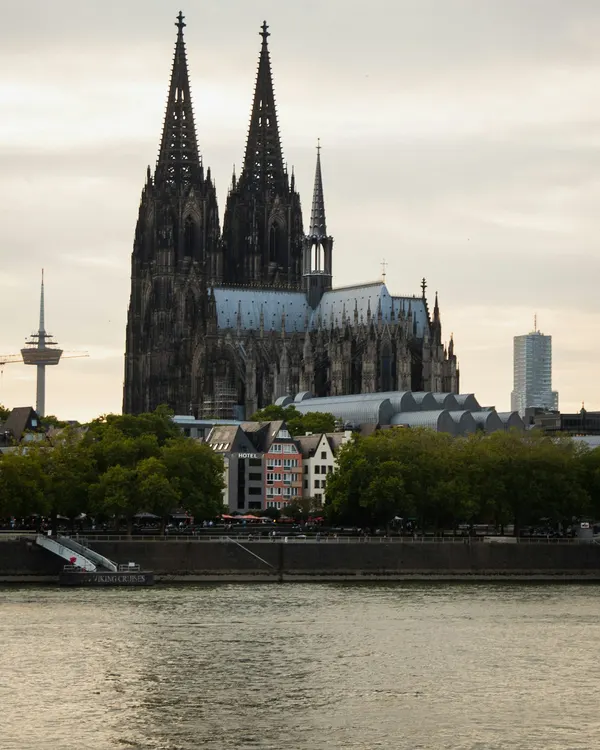
Getting around Köln Messe/Deutz station has ICE, regional and S-Bahn trains, and Stadtbahn lines 1, 7 and 9 cross the Deutzer Brücke from Deutzer Freiheit into the centre.

Search homes in Cologne

Choosing an area in Cologne

What are the best areas for students in Cologne?

Ehrenfeld (former factory district turned creative and multicultural hub), Sülz (student favourite next to the university and the stadtwald), Südstadt (chlodwigplatz, the volksgarten and rhine harbour views) and Deutz (right-bank views of the cathedral, the messe and th köln). Every area above has its own section with transport and what the housing is like.

Where do young professionals and expats live in Cologne?

Ehrenfeld (former factory district turned creative and multicultural hub), Belgian Quarter (boutiques, brüsseler platz and altbau inside the ring), Südstadt (chlodwigplatz, the volksgarten and rhine harbour views) and Deutz (right-bank views of the cathedral, the messe and th köln). Every area above has its own section with transport and what the housing is like.

Where is the nightlife and going-out scene in Cologne?

Ehrenfeld (former factory district turned creative and multicultural hub) and Belgian Quarter (boutiques, brüsseler platz and altbau inside the ring). Every area above has its own section with transport and what the housing is like.

Found your area? Search Cologne

Search 341 homes