
Centro
Plaza de las Tendillas, the Judería and the historic quarters
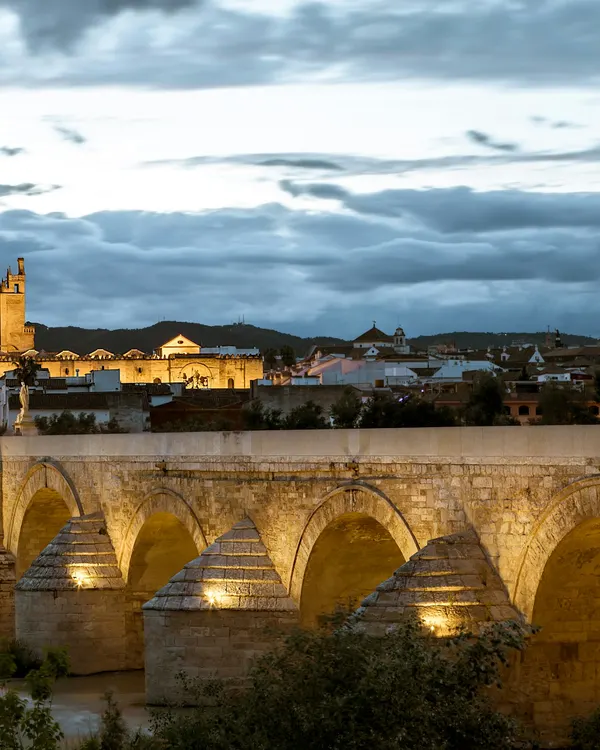
Central Córdoba takes in both the city's everyday commercial core and one of the largest historic centres in Europe. The Plaza de las Tendillas, with its equestrian statue and clock, is the meeting point for shopping streets and the broad Avenida del Gran Capitán. To the south, the lanes of the Judería wind down towards the Mezquita-Catedral and the Roman bridge over the Guadalquivir, while to the east the quieter old parishes around San Pedro, San Lorenzo and Santa Marina keep their churches, small squares and the arcaded Plaza de la Corredera.
Housing in the old quarters is shaped by the Córdoba patio: traditional houses built around an inner courtyard, many divided into flats, some with tiled floors, wooden beams and plants everywhere. Thick walls keep them cooler in summer, but rooms can be dark and lifts are rare. Around the Tendillas and the Gran Capitán, apartment blocks from the twentieth century offer lifts, air conditioning and larger layouts. Shared flats, studios and whole apartments are all common, and the Faculty of Philosophy and Letters in the old town makes the centre a natural choice for humanities students.
The trade-offs are crowds and noise: the streets near the Mezquita are full of visitors much of the year, and May festivals keep the squares busy late into the night. Further east, the old parishes feel much more residential. Almost everything is on foot, and Aucorsa buses connect the centre with the rest of the city and Rabanales. For a student district with more modern flats, look at Ciudad Jardín; for quieter residential streets, compare Levante.
Getting around Most Aucorsa bus lines pass through the centre, and the railway station is a walk north of the Gran Capitán.