
Centro Histórico
Steep granite streets, the town hall square and UBI's old mills
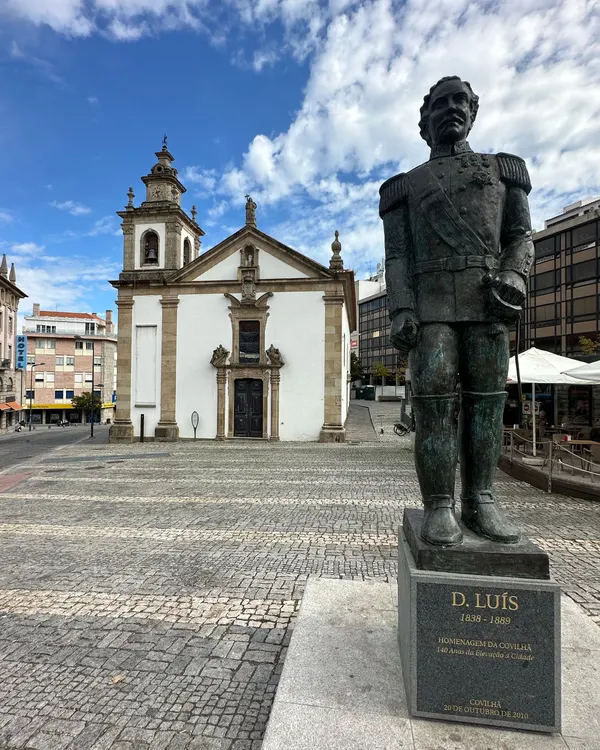
Covilhã's historic centre spreads across the upper slopes of the town, around the Praça do Município with its town hall, cafés and public garden. Narrow, steep streets lead off in every direction, lined with granite houses, small shops and churches, including Santa Maria Maior, whose facade is covered in blue and white azulejo tiles. Large murals painted for the WOOL urban art festival brighten walls across the centre, often with nods to the town's textile past.
That past is never far away. The University of Beira Interior's main buildings occupy former textile factories close to the centre, and the Wool Museum preserves the old Royal Cloth Factory inside the university itself. For students, living in the centre means walking to lectures, cafés and bars, though the walk back up can be demanding. Housing is mostly older flats and divided townhouses, often with character and views, but also with thin windows, steep staircases and limited heating, so check the details before booking. South-facing rooms on upper floors tend to be brighter and drier through the long winter months.
Rooms in shared flats are the most common rental here, along with small apartments for postgraduates and staff. Evenings are lively during term, when student bars and cafés fill up, and calmer during holidays. The public lifts and pedestrian bridges help with the steepest climbs, and buses connect the centre with the lower districts and the station. For newer buildings on flatter ground, compare Canhoso and Boidobra in our guide to Covilhã's neighbourhoods.
Getting around Urban buses and public lifts connect the centre with the university buildings, the lower districts and the railway station.