Skip to content
FlatHunt Search Dortmund

Dortmund · neighbourhood guide

Where to live in Dortmund

Dortmund is spread out, and the Stadtbahn and S-Bahn decide more about daily life than distance on the map. The centre inside the Wallring is practical but busy. Innenstadt-West, with the Kreuzviertel, is the student favourite, while Innenstadt-Ost is calmer and more grown-up. Hörde has reinvented itself around the Phoenix-See lake, Brackel stretches quietly along the eastern Hellweg, and Lütgendortmund looks west towards Bochum. Use these profiles to match an area to your routine before you start comparing furnished listings.

Dortmund, Germany

Mitte

The compact city core inside the Wallring, by the Hauptbahnhof

  • commuters
  • short stays
  • car-free living

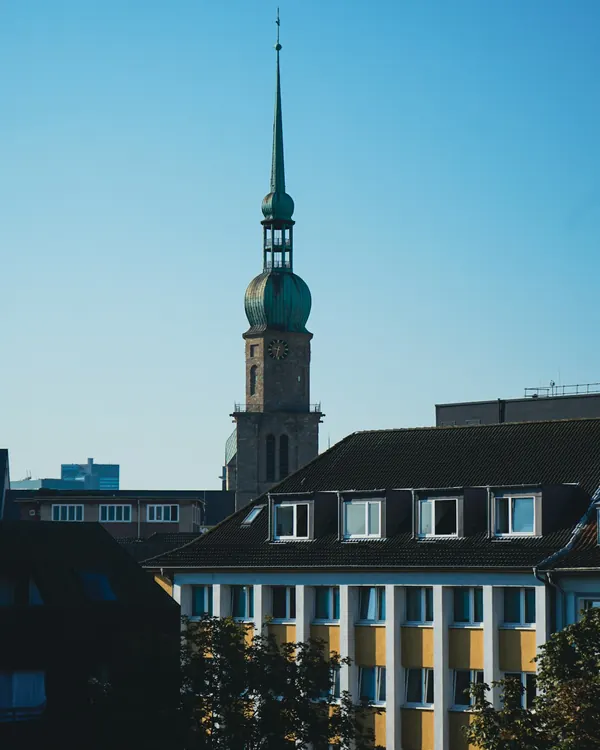
Dortmunders call their centre simply the City: the area enclosed by the Wallring, a ring road that follows the line of the medieval town walls. Westenhellweg and Ostenhellweg form the main shopping axis, meeting at the Reinoldikirche and the Alter Markt, and the Hauptbahnhof sits on the northern edge of the ring with the Dortmunder U, a former brewery building turned arts centre, just to the west. Most of the centre was destroyed in the Second World War and rebuilt from the 1950s, so the housing is mostly post-war blocks with flats above shops, plus newer apartment buildings and a few surviving older facades.

Getting around Dortmund Hauptbahnhof has S-Bahn, regional and long-distance trains, and Stadtbahn lines meet underground at Stadtgarten and Kampstraße.

Living in Mitte · 62 furnished homes

Innenstadt-West

Kreuzviertel Altbau, the Westpark and the road to the stadium

  • students
  • WG sharers
  • young professionals

Innenstadt-West is the district most Dortmund students hope to land in, mainly because of the Kreuzviertel. Built around the Kreuzkirche in the decades either side of 1900, it is a grid of four- and five-storey Altbau houses with high ceilings, tall windows and ground-floor cafés, pubs and bakeries. Flats here are often shared by three or four people, which makes it the classic WG quarter. To the north, the Unionviertel around Rheinische Straße mixes older housing with studios, galleries and the Dortmunder U, while Dorstfeld further west is more residential and a little cheaper in feel.

Getting around Stadtbahn lines U45 and U46 run to the Westfalenhallen, and the S1 stops at Dorstfeld on its way to the university and Bochum.

Living in Innenstadt-West · 55 furnished homes

Innenstadt-Ost

Kaiserstraße Altbau, garden-city villas and quiet side streets

  • professionals
  • couples
  • longer stays

Leave the Wallring at the Ostentor and you enter one of Dortmund's most sought-after residential districts. The Kaiserstraße area, often called the Kaiserviertel, has rows of restored Altbau houses, a local shopping street with bakeries, cafés and small shops, and side streets lined with trees. Further south-east, the Gartenstadt was planned in the early twentieth century as a garden suburb, with detached and semi-detached houses on curving streets. Körne, to the east along the Hellweg, mixes older houses with post-war blocks and newer flats, and is a little more affordable in feel than the streets nearer the Wallring.

Getting around The U43 Stadtbahn runs east along the Hellweg through Körne, and the centre is a short walk or cycle from the Kaiserstraße area.

Living in Innenstadt-Ost · 56 furnished homes

Hörde

A steel town reborn around the Phoenix-See lake

  • professionals
  • couples
  • families
  • runners

Hörde was an independent town until it joined Dortmund in 1928, and for most of its history it lived from iron and steel. When the Phoenix works closed, the eastern site was flooded to create Phoenix-See, a lake with a promenade, a harbour and new housing on its banks, while the River Emscher was given a more natural course alongside it. On the western site, Phoenix-West, a former blast furnace stands next to offices and technology firms. The Hörder Burg, a castle by the lake, links the new waterfront with the older town centre.

The result is a district of contrasts. Around the lake you find modern apartment buildings with balconies and lifts, some of the most desirable new flats in the city. A few streets away, the old centre of Hörde has older houses, a market and everyday shops, and further out the Clarenberg estate and other post-war housing are more modest. Furnished apartments tend to sit in the newer buildings and suit professionals, couples and people relocating with a company. Students are fewer but not absent, since the TU campuses are reachable by bus and train, and a room in a shared flat near the old centre can be a pleasant alternative to the crowded inner districts.

The lake is the main attraction: a full loop is a popular run or walk, and summer evenings bring people out to the cafés on the harbour. Westfalenpark lies between Hörde and the centre, and fields and woods begin at the district's southern edge. If you want more city around you, compare Mitte or Innenstadt-Ost, or browse studios in Dortmund.

Getting around The U41 Stadtbahn links Hörde with the city centre and the Hauptbahnhof, and Dortmund-Hörde station has regional trains.

Search homes in Dortmund

Brackel

Quiet streets and gardens along the eastern Hellweg

  • families
  • quiet living
  • frequent flyers

Brackel grew along the Hellweg, the ancient trade road that runs east from Dortmund towards Unna and Soest, and the district still follows that line. Brackel itself has an old village core around its church, while Asseln and Wickede continue further east and Wambel lies closer to the centre. Housing is a mix of detached and semi-detached houses with gardens, small blocks of flats from the post-war decades and newer developments, with little of the dense Altbau found in the inner districts.

People choose Brackel for space and quiet. It suits families, couples and professionals with jobs in the east of the city or in neighbouring towns, and it is a practical base for anyone who flies often, since Dortmund Airport lies on the eastern edge of the city beyond Wickede. Furnished listings are fewer than in the centre and are often whole flats or rooms in family houses, so expect to look a little longer and to plan your move-in date carefully. In return, rooms are often larger and parking is far easier than in the inner city.

Everyday needs are met along the Hellweg, where supermarkets, bakeries and local shops line the main road, and fields and woodland begin quickly at the district's edges. The city centre is a straight Stadtbahn ride away, so evenings out in the Kreuzviertel or at a match remain easy. If Brackel feels too far out, Innenstadt-Ost offers a similar calm closer in, and Hörde adds the lake. Browse apartments in Dortmund to compare districts.

Getting around The U43 Stadtbahn runs along the Hellweg from Brackel and Wickede to the city centre, and regional trains stop at Brackel station.

Search homes in Dortmund

Lütgendortmund

Former mining villages on the western edge, next to Bochum

  • families
  • Bochum commuters
  • quiet living

Lütgendortmund sits on the far western edge of the city, where Dortmund meets Bochum and Witten. Like much of the Ruhr, it grew from farming villages into mining communities in the nineteenth century, and the pattern survives: small centres with a church and a high street, rows of former miners' houses, post-war blocks and newer family homes. The district includes Marten, Oespel, Kley and Bövinghausen, where the Zeche Zollern colliery, with its Art Nouveau machine hall, is now an industrial museum.

Most residents are families, couples and long-time locals, and the area feels quiet compared with the inner districts. That makes it a good choice for people who want a calm base and do not need the centre every evening, as well as for anyone working in Bochum or Witten. Furnished listings are fewer here, often whole flats or rooms in houses, and sometimes come with the luxury of a garden or parking space that is rare closer in. Ask about the bus and S-Bahn connections from the exact street, since the district is spread out and some corners are better served than others.

Shopping is easy at the Indupark retail area in Oespel and Kley, and the high street in Lütgendortmund covers daily needs such as bakeries, pharmacies and supermarkets. Green space is everywhere, from local parks to fields at the district's edges. TU Dortmund's campuses are closer than from the eastern districts, and neighbouring Bochum is right next door. If you prefer more life around you, compare Innenstadt-West or browse rooms in Dortmund.

Getting around The S4 runs from Lütgendortmund across the west of the city to the centre, with buses into neighbouring Bochum.

Search homes in Dortmund

Choosing an area in Dortmund

Where do young professionals and expats live in Dortmund?

Mitte (the compact city core inside the wallring, by the hauptbahnhof), Innenstadt-West (kreuzviertel altbau, the westpark and the road to the stadium), Innenstadt-Ost (kaiserstraße altbau, garden-city villas and quiet side streets) and Hörde (a steel town reborn around the phoenix-see lake). Every area above has its own section with transport and what the housing is like.

Which parts of Dortmund are quieter or good for families?

Hörde (a steel town reborn around the phoenix-see lake), Brackel (quiet streets and gardens along the eastern hellweg) and Lütgendortmund (former mining villages on the western edge, next to bochum). Every area above has its own section with transport and what the housing is like.

Found your area? Search Dortmund

Search 361 homes