Skip to content
FlatHunt Search Ferrara

Ferrara · neighbourhood guide

Where to live in Ferrara: four areas compared

Ferrara is flat and compact, and almost everyone cycles, so no part of the city is far from lectures. The real choice is between living inside the walls or just outside them. The medieval centre puts the castle, the cathedral and student life on your doorstep; the Addizione Erculea, the Renaissance half of the walled city, is greener and calmer. Outside the walls, Borgo San Giorgio offers a quiet village feel, and Via Bologna roomier post-war flats. Here is how they compare.

Ferrara, Italy

Centro Storico

Medieval lanes around the castle and the cathedral

  • students
  • Erasmus
  • car-free living
  • evenings out

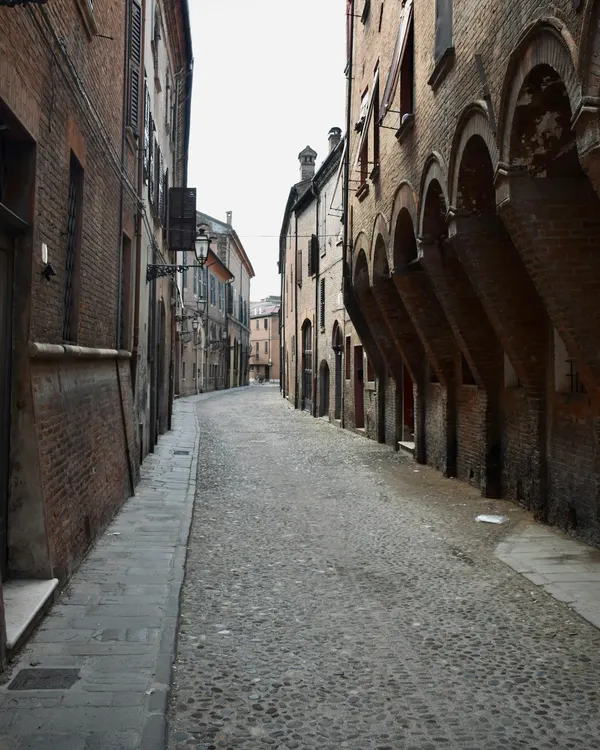
Ferrara's medieval centre spreads south of the Castello Estense, the moated brick castle built by the Este family in the fourteenth century that still dominates the city. Next to it, the Romanesque Cathedral of San Giorgio faces Piazza Trento e Trieste, lined with an arcade of shops, and behind it a web of narrow streets runs towards the river side of the walls. Via delle Volte, crossed by covered passageways that once linked merchants' houses with their warehouses, is one of the best-preserved medieval streets in Italy, and Via Mazzini marks the old Jewish quarter.

Housing is mostly in historic buildings of two to four storeys, with wooden beams, brick walls, internal courtyards and shared staircases; lifts are rare. Large flats are often divided into rooms for students, and many of the University of Ferrara's departments and libraries are within a few minutes' ride, which makes the centre the first choice for many. Evenings bring students to the bars and wine counters around the cathedral and the side streets nearby, so ask which way a room faces if you need quiet.

Car traffic is restricted in much of the centre, and the bike is the obvious way to get around; you will see it parked against every wall. The station is a short ride north-west along Viale Cavour, and the tree-lined walls make a circular park for running and cycling. Competition is strongest before the autumn semester, so compare rooms for rent in Ferrara early if you want to live a short ride from the cathedral square.

Getting around Cycle or walk everywhere; TPER buses run along the edges of the centre, and the station is a short ride up Viale Cavour.

Search homes in Ferrara

Addizione Erculea

The Renaissance new town of wide streets and palazzi

  • postgraduates
  • couples
  • quiet seekers
  • students

At the end of the fifteenth century Duke Ercole I d'Este commissioned the architect Biagio Rossetti to double the size of Ferrara, and the result, the Addizione Erculea, is often described as the first modern city plan in Europe. North of the castle, long, straight streets cross at right angles, the main one being Corso Ercole I d'Este, lined with palazzi and garden walls. At its central crossing stands the Palazzo dei Diamanti, its facade covered in thousands of marble points, now home to the national picture gallery and major exhibitions.

This half of the walled city feels very different from the medieval centre: wider streets, more greenery, large gardens hidden behind walls and noticeably less noise at night. Piazza Ariostea, a broad open square, hosts the horse races of the Palio di Ferrara each spring, and Parco Massari offers shade on summer afternoons. Housing mixes grand old palazzi split into flats with simpler early-twentieth-century buildings, and you are more likely to find a garden view or a shared courtyard here than near the cathedral, and bedrooms facing the back are often remarkably quiet.

Several university buildings are in this part of town, and the medieval centre is a few minutes away by bike, so the Addizione suits students who want quiet evenings, postgraduates and couples. Along the northern walls, the green bastions and moat make one of the city's favourite places for a run. Rooms here turn over more slowly than in the busiest streets, so compare rooms in Ferrara regularly and be ready to move quickly when the right one appears.

Getting around A short ride to the castle and the cathedral; TPER buses run along the main avenues, and the station is close to the western side.

Search homes in Ferrara

Borgo San Giorgio

The old borgo around Ferrara's first cathedral

  • postgraduates
  • young professionals
  • quiet seekers

Borgo San Giorgio lies just outside the southern walls, across the Po di Volano, and in a sense it is where Ferrara began. Its basilica, San Giorgio fuori le mura, served as the city's cathedral until the twelfth century, when the new cathedral was built inside the walls, and its bell tower and quiet cloister still mark the heart of the borgo. The streets around it form a small, self-contained borgo with its own church square, bakeries and bars, distinct from both the historic centre and the newer suburbs beyond.

For renters, the area offers a quiet residential setting at a short distance from the centre. Housing mixes older houses along the main streets with post-war apartment blocks, many with lifts, balconies and storage space, and both rooms in shared flats and whole apartments come up. Families and long-term residents set the tone, and evenings are calm, which makes it a reasonable choice for postgraduates, hospital staff and young professionals who do not need to be in the middle of student nightlife.

Crossing into the medieval centre takes a few minutes by bike over the bridges on the Volano, and the cycle paths along the river and the southern walls make the ride pleasant in good weather. Buses connect the area with the station and the rest of the city. Supermarkets and everyday services are close. If you want calm and space within an easy ride of lectures, compare rooms for rent in Ferrara on this side of the river.

Getting around A short bike ride over the Po di Volano to the centre; TPER buses link the borgo with the station and other districts.

Search homes in Ferrara

Via Bologna

Post-war residential Ferrara south of the walls

  • tight budgets
  • groups sharing
  • light sleepers
  • remote workers

The Via Bologna district takes its name from the main road that leaves Ferrara towards Bologna, south of the walls, and it is one of the city's largest residential areas. Most of it was built in the decades after the Second World War: apartment blocks of four to eight floors, rows of terraced houses, schools, sports grounds and small parks between the buildings. It is a district of families, retirees and commuters, with a practical, everyday rhythm far from the tourist routes and the student bars of the centre.

For students and young professionals, the attraction is space and value. Flats here are generally larger than those inside the walls and usually come with lifts, balconies, cellars and sometimes a parking space or garage, while rents for rooms in shared flats tend to be more moderate. Large supermarkets, pharmacies, gyms and local bars cover daily needs, and the area is much quieter at night than the streets around the cathedral, which suits light sleepers and anyone working from home.

The trade-off is distance. Lectures and evenings in the centre mean a bike ride or a bus, and in winter fog that ride can feel longer than it is, so check the cycle route from a listing to your faculty before you commit. Buses along Via Bologna run into the centre and to the station throughout the day. If you want a modern flat with a lift rather than a medieval staircase, compare rooms for rent in Ferrara here alongside the historic centre.

Getting around TPER buses along Via Bologna run into the centre and to the station, and the cycle ride to the walls is short and flat.

Search homes in Ferrara

Choosing an area in Ferrara

What are the best areas for students in Ferrara?

Centro Storico (medieval lanes around the castle and the cathedral) and Addizione Erculea (the renaissance new town of wide streets and palazzi). Every area above has its own section with transport and what the housing is like.

Where do young professionals and expats live in Ferrara?

Borgo San Giorgio (the old borgo around ferrara's first cathedral) and Via Bologna (post-war residential ferrara south of the walls). Every area above has its own section with transport and what the housing is like.

Which parts of Ferrara are quieter or good for families?

Addizione Erculea (the renaissance new town of wide streets and palazzi) and Borgo San Giorgio (the old borgo around ferrara's first cathedral). Every area above has its own section with transport and what the housing is like.

Found your area? Search Ferrara

Search 40 homes