
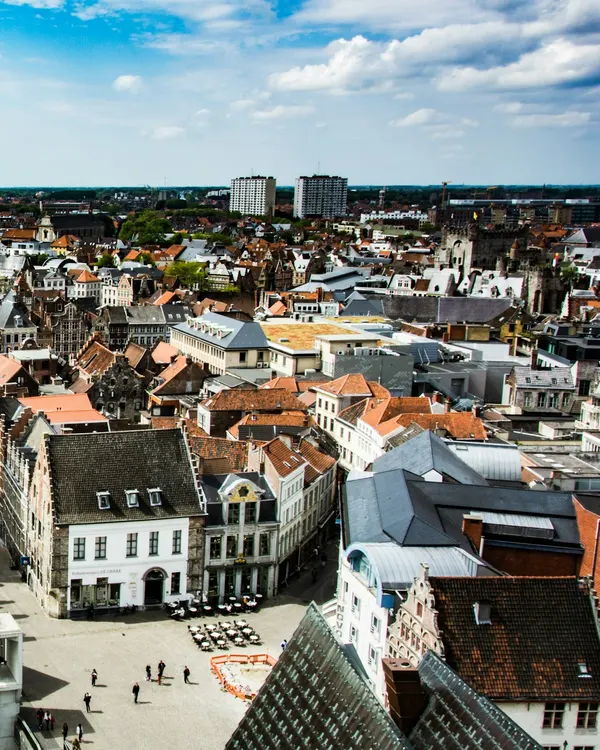
Binnenstad
Medieval Ghent, from the Graslei to Patershol
The Binnenstad is the old city inside the ring road, and most of what visitors come to see lies here: the Graslei and Korenlei on the Leie, the Gravensteen castle, St Bavo's Cathedral with the Ghent Altarpiece, the Belfry and the market squares of Korenmarkt and Vrijdagmarkt. North of the castle, Patershol is a knot of narrow medieval lanes now filled with restaurants. Because traffic was pushed out of the core when the circulation plan arrived, daily life is mostly on foot or by bike, and the streets stay lively well into the evening.
Housing is old and varied. Narrow town houses with stepped gables have often been divided into studios and small flats, and many apartments sit above shops and cafés on the main streets. Expect steep staircases, few lifts and rooms shaped by centuries of rebuilding. Furnished studios and one-bedroom flats are common, and they suit professionals, couples and postgraduate students who want to walk everywhere. Noise is the main trade-off: the Gentse Feesten fill the centre for ten days every July, and squares like Vrijdagmarkt and Korenmarkt rarely go quiet on weekend nights.
For students, the location works well. Many Ghent University faculties and libraries lie on the southern edge of the old town around the Boekentoren, and the Kouter and the shopping streets are on the way. Supermarkets are smaller than in the outer districts, but the weekly markets help. If you want more space for the money, look east to Sint-Amandsberg or south to the area around Gent-Sint-Pieters, both a short bike ride away. The neighbourhood guide compares them side by side.
Getting around Trams stop at Korenmarkt and the Kouter, tram 1 runs south to Gent-Sint-Pieters station, and Gent-Dampoort station lies on the eastern edge.