Skip to content
FlatHunt Search Jávea

Jávea · neighbourhood guide

Where to live in Jávea

Jávea is spread out, and each part of town offers a different life. The old town is Spanish, practical and busy all year; the Port combines a working harbour with a seafront promenade; the Arenal is all about the sandy beach, lively in summer and peaceful in winter; and the villas on the Montgó slopes trade convenience for space, pools and views. The guides below explain what each area is like for renters, including when it is busiest and what to check before you book.

Jávea, Spain

Old Town

Stone streets, the fortified church and the market

  • year-round residents
  • people learning Spanish
  • living without a car

Jávea's old town lies inland, a short way from the sea, where it was safer from pirate raids in centuries past. At its heart stands the Gothic church of Sant Bartomeu, built as a fortress as well as a place of worship, surrounded by narrow streets of houses with stone door frames and wrought-iron window grilles, many built from the golden local sandstone known as tosca. The town hall, the municipal market and a cluster of small squares make this the administrative and everyday centre of Jávea.

Housing here is mostly traditional townhouses on several floors, some beautifully restored with roof terraces and patios, alongside small apartment buildings. Furnished flats in the old town suit people who want a local routine rather than a beach holiday: shopping at the market, coffee in the square and Spanish neighbours. Streets are narrow and parking is limited, and older houses can be cool and damp in winter, so ask about heating and ventilation as well as stairs and terraces.

Living here means banks, the town hall, health services, schools and shops are within walking distance, and life continues all year, not just in summer. The Port and the Arenal are a short drive or bus ride away, and cycling between them is possible along the main road. For seafront living with a working harbour, look at the Port; for sand and beach bars on your doorstep, compare the Arenal; and for space and views, villas on the slopes of the Montgó are the other option.

Getting around Local buses to the Port and the Arenal and regional buses to neighbouring towns, with shops and services on foot.

Search homes in Jávea

The Port (Duanes de la Mar)

A working fishing harbour and seafront promenade

  • couples
  • retirees
  • remote workers

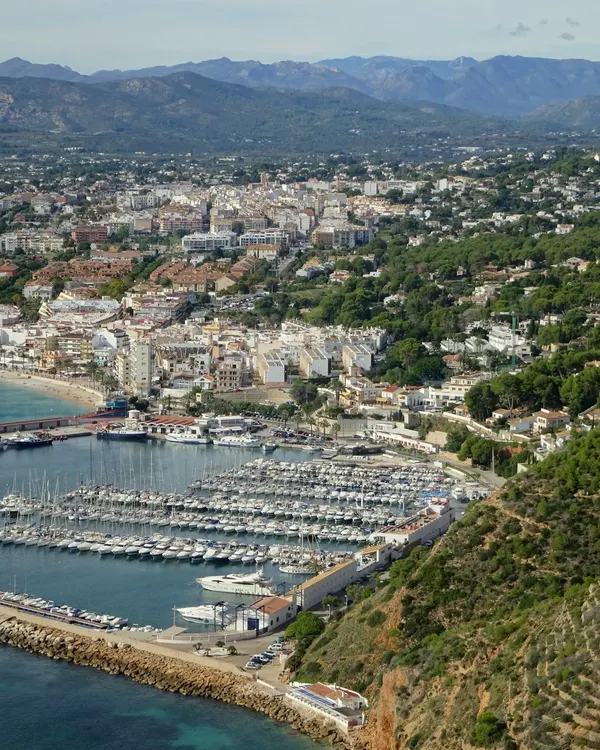
The Port, officially Duanes de la Mar, grew up around Jávea's harbour on the northern side of the bay, below Cap de Sant Antoni. It is still a working fishing port, and the daily return of the boats and the fish auction give it a rhythm that holiday resorts lack. Along the seafront, a promenade lined with cafés, restaurants and shops leads to small pebble beaches and coves, and the modern church of Nuestra Señora de Loreto, with its roof shaped like an upturned boat hull, is a local landmark.

Housing is mainly apartment buildings along and just behind the seafront, many with balconies or terraces facing the sea, plus older fishermen's houses and townhouses in the streets behind. Furnished apartments here suit couples, retirees and remote workers who want sea views and an evening walk along the promenade. Flats facing the harbour can be noisy in summer evenings and exposed to wind in winter, so ask about orientation, insulation and parking, which is scarce in high season. Fresh fish from the harbour turns up on local menus the same day.

The Port has life all year round, with residents rather than tourists filling its bars in winter, and supermarkets, pharmacies and services are within walking distance. Buses link it with the old town and the Arenal, and the coves and walking trails towards Cap de Sant Antoni start nearby. For a more Spanish, inland routine, compare it with the old town; for a long sandy beach, the Arenal lies a short way along the bay.

Getting around Local buses to the old town and the Arenal, with the promenade and most daily shopping on foot.

Search homes in Jávea

The Arenal

Jávea's sandy beach, bars and restaurants

  • families
  • beach lovers
  • winter stays

The Arenal is Jávea's main sandy beach, a gently curving bay in the middle of the coastline between the Port and the southern headlands. The promenade behind it is lined with restaurants, cafés, ice-cream shops and beach bars, and the shallow, calm water makes it popular with families. The Parador de Jávea stands right by the beach, and early mornings and evenings bring swimmers, paddleboarders and walkers out along the shore.

Housing around the Arenal is mainly apartment complexes, many with communal pools and gardens, and townhouses in the streets behind the beach, with villas spreading up the hillsides. Furnished apartments suit couples, families and remote workers who want the beach as their daily backdrop. In July and August the area is crowded and noisy into the night, while from October to May many complexes are half empty and some businesses close or reduce their hours. Ask whether your complex is busy all year, and about heating for the winter months.

Supermarkets and services are within walking distance or a short drive, and buses link the Arenal with the Port and the old town. Cycling and walking along the coast are easy for much of the year, and winter mornings on the empty sand are one of the area's quiet pleasures. The Arenal is a good base for a winter stay by the sea, or for a summer stay if you enjoy the bustle. For a working harbour and year-round local life, compare it with the Port; for space and quiet, look at villas on the slopes of the Montgó.

Getting around Local buses to the Port and the old town, with the beach promenade for walking and cycling.

Search homes in Jávea

Montgó slopes

Villas with views below the Montgó massif

  • families
  • remote workers
  • walkers and climbers

The Montgó, the great limestone massif that rises behind Jávea and its neighbour Dénia, is protected as a natural park, and its lower slopes are lined with residential developments of villas and low-rise homes. Winding roads climb between pine trees and gardens, and many houses enjoy views across the bay, the old town and the headlands. Paths into the natural park start close by, with routes for walking, running and climbing to the summit.

Rentals on the slopes are mostly detached villas and bungalows, often with private or shared pools, terraces and gardens, and some apartments in small complexes. They suit families, couples and remote workers who want space and quiet for a long stay, as well as people who already know the area. Homes here are generally comfortable in summer thanks to the breeze and the shade of the pines, but many were built as holiday homes, so ask about heating, insulation and internet speed for winter stays. Check who maintains the pool and garden and what is included in the rent.

A car is essential: buses rarely reach the developments, and shops, schools and services are in the old town, the Port or the Arenal, all a short drive away. In return you get privacy, birdsong and some of the best views on the Costa Blanca. Before booking, ask for the exact location and check the drive, as some roads are steep and narrow. For shops and services on foot, compare it with the old town; for sea views with a promenade, look at the Port.

Getting around A car is essential; buses rarely reach the developments, and the old town, the Port and the Arenal are a short drive away.

Search homes in Jávea

Choosing an area in Jávea

Where do young professionals and expats live in Jávea?

The Port (Duanes de la Mar) (a working fishing harbour and seafront promenade) and Montgó slopes (villas with views below the montgó massif). Every area above has its own section with transport and what the housing is like.

Which parts of Jávea are quieter or good for families?

The Arenal (jávea's sandy beach, bars and restaurants) and Montgó slopes (villas with views below the montgó massif). Every area above has its own section with transport and what the housing is like.

Found your area? Search Jávea

Search 37 homes