
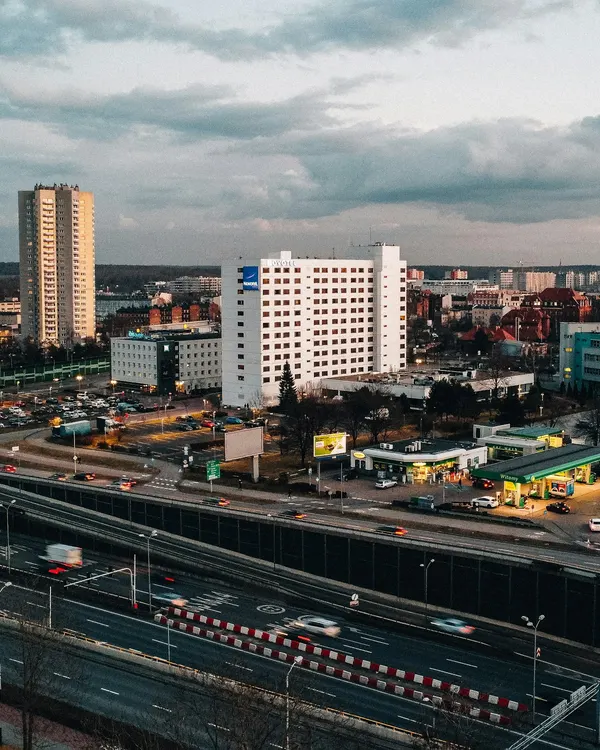
Śródmieście
The Rynek, Mariacka Street and the culture zone by the Spodek
Katowice received town rights only in 1865, so its centre is younger than most Polish city centres: a grid of late nineteenth- and early twentieth-century tenements, interwar modernist buildings and post-war blocks around the Rynek, the main square. The Rynek itself has been rebuilt in recent years, with trams running through it, and nearby Mariacka Street, closed to cars, has become the city's main strip of bars and restaurants. Flats range from high-ceilinged tenement apartments to studios in new buildings, and the condition of stairwells and windows varies a lot from one building to the next.
Living in the centre puts nearly everything within walking distance. The main railway station, rebuilt together with the Galeria Katowicka shopping centre, is a few minutes from the Rynek, and the University of Silesia's central buildings are close by. Students, young professionals and people on short contracts make up much of the furnished market, which is small, so good flats go quickly. Mariacka gets loud on weekend nights; if you need quiet, ask for a flat facing a courtyard.
A short walk north-east of the Rynek, the culture zone has transformed a former coal mine into one of the most interesting parts of the city. The Silesian Museum uses the old mine site, the NOSPR concert hall is home to the Polish National Radio Symphony Orchestra, and the International Congress Centre stands beside the Spodek, the saucer-shaped arena that is the city's best-known landmark. Concerts, festivals and conferences bring visitors throughout the year. Read the neighbourhood guide to compare quieter districts.
Getting around Most tram lines meet around the Rynek, and Katowice's main railway station is a short walk away with regional and long-distance trains.