
Centre-ville (Perret)
UNESCO-listed concrete grid between the beach and the docks
The centre of Le Havre looks like nowhere else in France. After the bombing of 1944 levelled the old town, Auguste Perret and his team rebuilt it on a regular grid using prefabricated concrete, with long avenues, colonnaded blocks and generous squares. The result, listed by UNESCO in 2005, is now admired as a landmark of post-war architecture. The tower of Saint-Joseph's church rises above the rooftops like a lighthouse, and Oscar Niemeyer's white Volcan cultural centre sits on the square near the old harbour basin.
For tenants, Perret's apartments have real advantages. They were designed to be bright, with large windows, high ceilings by modern standards and practical layouts, and many have balconies or views over the city. Flats range from studios to large family apartments, and furnished lets are common for students, interns and people on work contracts. Avenue Foch leads towards the sea and the Porte Océane, and the MuMa art museum, with its large Impressionist collection, faces the harbour entrance.
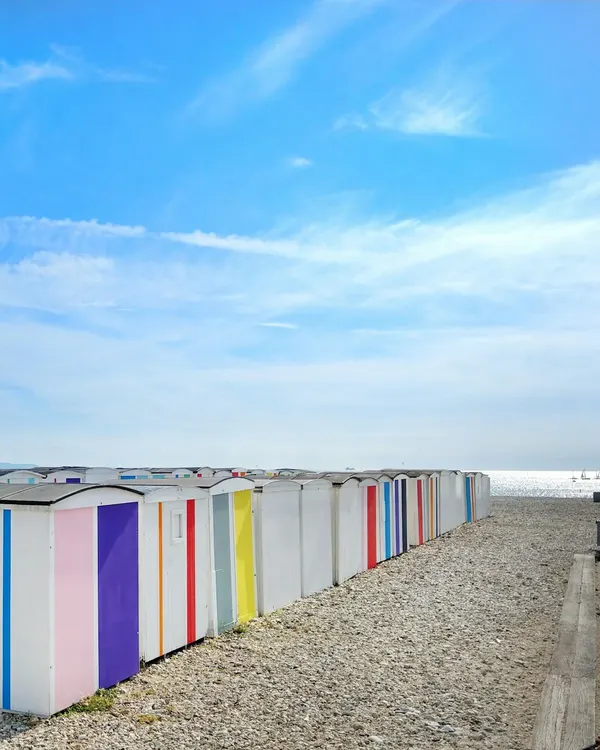
Daily life is easy here. The tram runs through the centre to the beach and the station, shops and markets are a short walk away, and the pebble beach with its rows of beach huts is right at the end of the avenues. Some find the architecture austere at first, and streets can feel windy and quiet in the evening. If you want more of a neighbourhood bustle, compare with Sainte-Marie and Saint-Léon or see current rooms for rent in Le Havre. Bakeries, supermarkets and cafés are spread across the grid, so errands rarely take long.
Getting around The shared section of tram lines A and B crosses the centre, with stops at the Hôtel de Ville and towards the beach and the station.