
Altstadt
UNESCO old town on an island, with alleys and courtyards
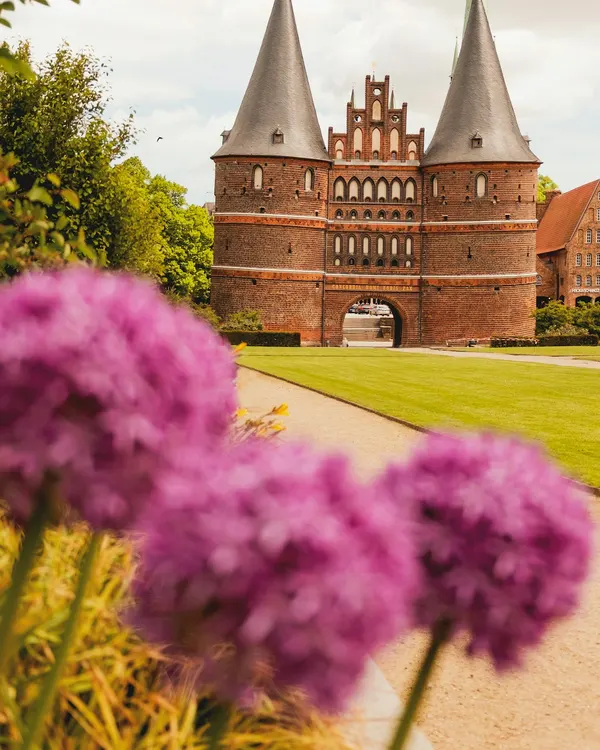
Lübeck's Altstadt sits on an oval island ringed by the Trave and the Elbe-Lübeck Canal, and almost everything about it reflects the city's centuries as the leading port of the Hanseatic League. St Mary's Church, the model for many brick Gothic churches around the Baltic, rises above the town hall and the market square. The Holstentor, the city's best-known gate, stands on the western side facing the station, and the streets in between are lined with tall gabled merchants' houses. The whole old town has been a UNESCO World Heritage Site since 1987.
Behind the street fronts lie the Gänge and Höfe, narrow passages and courtyards where craftsmen and workers once lived in tiny houses. Some are now quiet residential courtyards open to visitors during the day, and they show how densely the island was built. The old town has the city's main shopping streets, cafés, restaurants, the theatre and museums including the European Hansemuseum on the history of the Hanseatic League. Walks along the water around the island are a daily pleasure.
Living on the island means walking almost everywhere and being a short walk from the Hauptbahnhof. The trade-offs are visitors in summer and at the Christmas markets, older buildings with steep stairs, and many flats that are let to tourists rather than residents. Look for furnished flats explicitly offered for longer stays, check whether you can register at the address, and ask whether the bedroom faces a busy street or a quiet courtyard. The university campus in St. Jürgen is a short bike or bus ride away.
Getting around City buses run around and across the island, and the Hauptbahnhof lies just west of the Holstentor, a short walk from the old town.