Skip to content
FlatHunt Search Marseille

Marseille · neighbourhood guide

Where to live in Marseille: neighbourhoods for students and newcomers

Marseille is big, hilly and varied, and the feel of a district can change within a few streets, so it pays to choose carefully. Le Panier is the historic hilltop quarter, Cours Julien the creative and lively centre, Castellane and Longchamp the well-connected residential districts, and Endoume the seaside village by the Corniche. Most students stay close to the metro to reach Saint-Charles, La Timone or the bus to Luminy. Each guide below covers housing, transport, noise and who tends to live there.

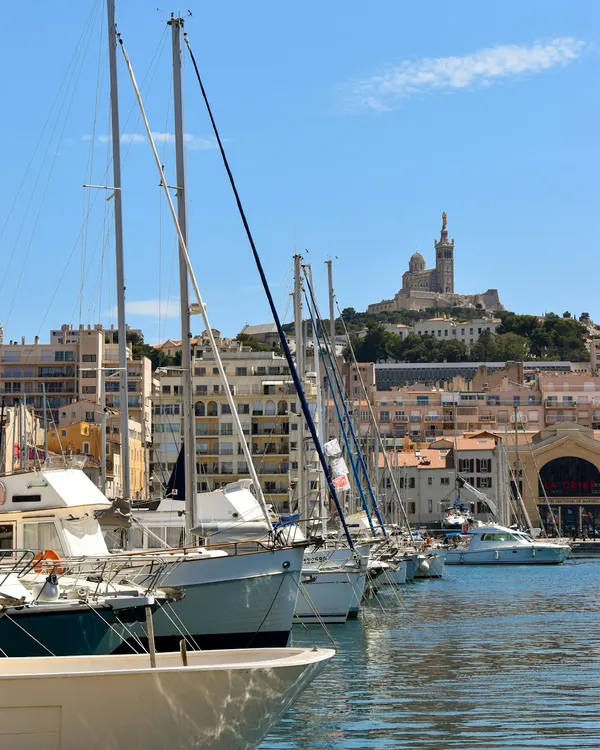
Marseille, France

Le Panier

The oldest quarter: steep lanes, street art and views over the port

  • creatives
  • young professionals
  • couples

Le Panier is where Marseille began, on the hill above the north side of the Vieux-Port where Greek settlers founded the city more than two and a half thousand years ago. Today it is a tangle of steep lanes, stairways and small squares, with washing hanging between pastel façades and murals on many walls. La Vieille Charité, a former almshouse built around a chapel with an elegant domed roof, now houses museums, and the district runs down to the Cathédrale de la Major and the MuCEM museum on the waterfront.

Life in Le Panier is a mix of old Marseille and newer arrivals. Long-time families, many of Corsican and Italian origin, live alongside artists, young professionals and students, and the squares have cafés, small restaurants and craft shops. Housing is mostly old, narrow buildings divided into small apartments, often with steep stairs and no lift, and some flats have balconies or roof terraces with views across the port. Daytime brings tourists, but evenings are much calmer once the visitors leave and residents reclaim the squares.

Le Panier suits people who value character over space and want to walk to the Vieux-Port, the Joliette business district and the waterfront. Carrying shopping up the hill is part of the deal, and some streets need care at night, so visit before you sign. Rents vary widely between renovated flats and older ones in need of work. Compare current listings on our Marseille rooms page and look at Cours Julien or Castellane if you prefer a flatter, more central base.

Getting around Vieux-Port station on metro line 1 and Joliette on line 2 are at the foot of the hill, with trams running along rue de la République.

Search homes in Marseille

Cours Julien

Street art, bars and markets in the city's creative centre

  • students
  • creatives
  • night owls

Cours Julien is a long pedestrian square lined with plane trees, fountains, bars and terraces, and nearly every wall and staircase in the streets around it is covered in murals. Together with La Plaine, the large square just to the east officially called Place Jean-Jaurès, it forms the creative heart of central Marseille, full of record shops, second-hand clothes stores, small theatres and concert venues. Weekend markets add books, crafts and vintage finds, and the district fills with people on warm evenings, when the steps and terraces become one long outdoor living room.

The neighbourhood sits just above Noailles, Marseille's famous market district, where stalls and shops sell spices, fish, vegetables and North African specialities at low prices. Housing is made up of 19th-century apartment buildings, many of them split into rooms in colocations and small furnished flats, which makes Cours Julien one of the most popular areas for students and young people new to the city. The Canebière, the Vieux-Port and the shopping streets of the centre are all within a short walk.

The trade-offs are noise and some wear and tear. Bars stay busy until late, especially at weekends, and a few streets feel neglected, so ask which way a room faces and visit before committing. In return you get a central location, strong neighbourhood life and the metro at the bottom of the hill. If you want a quieter address nearby, look at the streets towards Castellane. Start with our list of rooms for rent in Marseille and filter by move-in date.

Getting around Notre-Dame-du-Mont station on metro line 2 sits right below the Cours, with Noailles station and its tram stop a few minutes' walk away.

Search homes in Marseille

Castellane

Central crossroads of fountains, boulevards and two metro lines

  • young professionals
  • medical students
  • couples

Place Castellane, with its monumental fountain, is one of the main crossroads of Marseille, where rue de Rome runs down to the centre and the long Avenue du Prado heads south towards the sea. The surrounding streets are lined with handsome 19th-century apartment buildings, bakeries, pharmacies and cafés, and the district has a solid, residential feel that is quite different from the bustle of the Vieux-Port. It is a practical everyday base, with supermarkets, banks and services all within walking distance.

Castellane is one of the best-connected places in the city: both metro lines stop here, and the tram runs along rue de Rome to the centre. That makes it easy to reach Saint-Charles station, La Timone hospital and university site, and the Prado towards the beaches and the Stade Vélodrome. Housing is largely apartment buildings with larger flats than in the old quarters, some of them split into shared apartments for students and young professionals. Streets towards Périer and the Prado become quieter and more upmarket the further south you go.

Castellane suits people who want a central address without the noise of the nightlife districts: students at La Timone, young professionals and couples. Traffic around the square can be heavy, so flats on the main roads may be noisy during the day. The Cours Julien bars are a short walk north if you want an evening out. Browse rooms for rent in Marseille to compare Castellane with livelier areas, and check how close each listing is to the metro.

Getting around Castellane is the interchange between metro lines 1 and 2, with a tram along rue de Rome to the centre and buses down the Prado.

Search homes in Marseille

Endoume

Seaside village feel by the Corniche and the Vallon des Auffes

  • remote workers
  • swimmers
  • couples

Endoume spreads over the rocky coast south-west of the Vieux-Port, below the basilica of Notre-Dame-de-la-Garde. Its streets of low houses and small apartment buildings run down to the sea, where the Corniche Kennedy follows the coast past the Plage des Catalans, the little fishing harbour of the Vallon des Auffes, spanned by a stone bridge, and the rocky inlets of Malmousque, where locals swim in summer. Few places in a big European city put the sea this close to the front door.

Life here is slower than in the centre. Residents shop at local bakeries and greengrocers, meet at café terraces on rue d'Endoume and spend summer evenings on the rocks. Housing ranges from small fishermen's houses and old apartment buildings to flats with sea views at a premium. Furnished rentals include small flats and rooms in shared houses, often more spacious and brighter than in the dense centre. The steep streets mean some walking, and parking is very difficult in summer, when visitors arrive for the beaches and the harbour restaurants.

The main drawback is transport: there is no metro, so you rely on buses along the Corniche and rue d'Endoume towards the Vieux-Port, a scooter or a fair amount of walking. Endoume suits remote workers, young professionals and anyone for whom the sea matters more than nightlife. If you study at Saint-Charles or La Timone, factor in a longer daily trip. Compare listings on our Marseille rooms page and read the neighbourhood guide to weigh it against central districts.

Getting around No metro: buses run along the Corniche and through Endoume to the Vieux-Port, about twenty minutes on foot from the eastern edge of the district.

Search homes in Marseille

Longchamp

Haussmann-style boulevards around the Palais Longchamp

  • students
  • young professionals
  • couples

The Longchamp district takes its name from the Palais Longchamp, a monumental 19th-century building with fountains and colonnades that celebrates the arrival of water from the Durance river. It houses the city's fine arts and natural history museums and opens onto a park that is one of the few large green spaces in central Marseille. Around it, the long, straight boulevard Longchamp and the streets of the Cinq-Avenues are lined with stately apartment buildings in a style close to Paris's Haussmann façades.

This is a residential area with a calmer, more orderly feel than the Vieux-Port or Noailles, but still close to everything. Saint-Charles railway station and Aix-Marseille Université's Saint-Charles site are a short walk or metro ride away, and the Canebière is at the bottom of the boulevard. Flats here are often large, with high ceilings and tall windows, so many are rented as colocations to students and young workers. Local shops, bakeries and markets cover daily needs, and the park is a good place to run, read or meet friends on a summer evening.

Longchamp suits students who need easy access to Saint-Charles or La Timone, as well as young professionals and couples looking for space at a central address. Some streets towards the railway are less attractive, so check the exact location of a listing. The metro and trams make getting around simple, though the beaches are a longer trip across town. See current rooms and student accommodation in Marseille to compare Longchamp with Castellane and Cours Julien.

Getting around Metro line 1 stops at Cinq Avenues–Longchamp and Réformés–Canebière, with trams along the boulevards towards the centre.

Search homes in Marseille

Choosing an area in Marseille

What are the best areas for students in Marseille?

Cours Julien (street art, bars and markets in the city's creative centre), Castellane (central crossroads of fountains, boulevards and two metro lines) and Longchamp (haussmann-style boulevards around the palais longchamp). Every area above has its own section with transport and what the housing is like.

Where do young professionals and expats live in Marseille?

Le Panier (the oldest quarter: steep lanes, street art and views over the port), Castellane (central crossroads of fountains, boulevards and two metro lines), Endoume (seaside village feel by the corniche and the vallon des auffes) and Longchamp (haussmann-style boulevards around the palais longchamp). Every area above has its own section with transport and what the housing is like.

Where is the nightlife and going-out scene in Marseille?

Le Panier (the oldest quarter: steep lanes, street art and views over the port) and Cours Julien (street art, bars and markets in the city's creative centre). Every area above has its own section with transport and what the housing is like.

Found your area? Search Marseille

Search 54 homes