Skip to content
FlatHunt Search Nice

Nice · neighbourhood guide

Where to live in Nice: neighbourhoods for students and newcomers

Nice is compact and most central districts are within walking distance of the sea, so the choice comes down to atmosphere, noise and budget. Vieux-Nice is the lively old town, the Port a more local harbour district, Libération an everyday neighbourhood around its market, the Musiciens district an elegant residential area between the station and the beach, and Cimiez a quiet green hill above the centre. Each guide below covers housing, transport, noise and who tends to live there.

Nice, France

Vieux-Nice

Baroque lanes, Cours Saleya market and the Castle Hill above

  • young professionals
  • couples
  • short stays

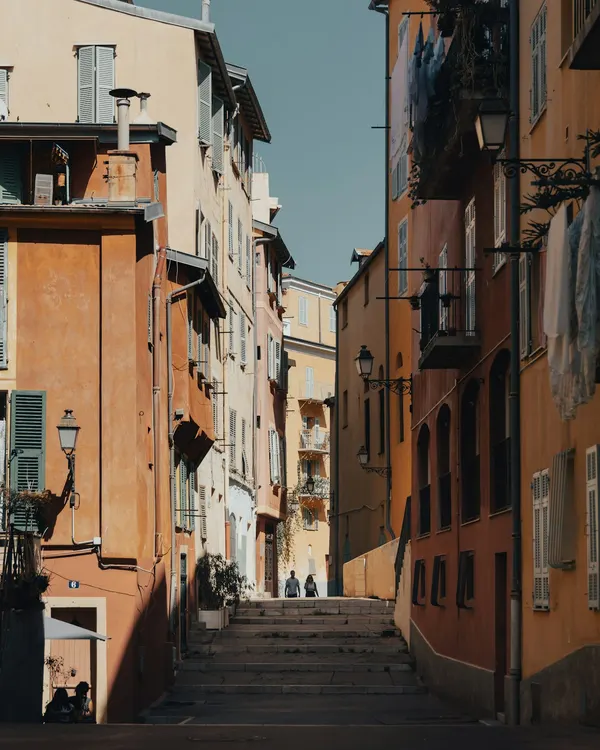
Vieux-Nice is the old town squeezed between the Colline du Château, the Castle Hill, and the sea. Its tall, narrow houses in shades of ochre, red and yellow line lanes so narrow that the sun barely reaches the ground, opening onto small squares such as Place Rossetti, in front of the Baroque cathedral of Sainte-Réparate. The Cours Saleya, a long square just behind the seafront, hosts the famous flower and food market most mornings and an antiques market on Mondays, and the evenings bring crowds to its restaurant terraces.

Living here means being in the middle of everything. Socca, the chickpea pancake that is Nice's signature snack, is sold hot from street stalls, and the beach and the Promenade des Anglais are a couple of minutes away. Housing is mostly small apartments in old buildings, often several floors up narrow staircases without a lift, with small windows and thick walls that keep rooms cool. Many have been renovated as furnished studios or flats, though some are let mainly to holidaymakers in summer.

The downsides are crowds, noise and limited space. From spring to autumn the old town is full of visitors, bars stay open late, and deliveries start early. It suits young professionals, couples and students who love the atmosphere and do not mind stairs. Check that a listing offers a proper lease rather than a holiday contract if you are staying for months. Compare listings on our Nice apartments page and look at the Port or the Musiciens district for calmer alternatives.

Getting around Tram line 1 stops at Opéra–Vieille Ville and Cathédrale–Vieille Ville on the edge of the old town, with the seafront and buses a short walk away.

Search homes in Nice

Le Port

Ochre façades around the harbour, antique shops and local bistros

  • young professionals
  • couples
  • food lovers

The Port district wraps around Port Lympia, Nice's historic harbour, on the eastern side of the Castle Hill. Its Italianate buildings, painted in deep reds and ochres with green shutters, surround a basin full of fishing boats and yachts, while larger ferries leave for Corsica from the outer quays. Place de l'Île-de-Beauté, with its colonnaded church facing the water, is one of the most photographed spots in the city, and the streets behind are known for their antique and second-hand shops, which draw collectors from across the region.

Compared with the old town, the Port feels more residential and local. Bistros, wine bars and bakeries serve people who live here rather than only tourists, and the shops around Place Garibaldi and the nearby streets cover everyday needs. Housing is mainly apartment buildings from the 19th and early 20th centuries, with flats ranging from studios to larger family apartments, some with balconies looking over the harbour. Furnished rentals include flats and rooms in shared apartments let to students and young professionals.

The district suits people who want to be central, close to the sea and the old town, but prefer a calmer, more neighbourly base. The coastal path towards Villefranche-sur-Mer and the small beaches below the Castle Hill are within walking distance. Some streets near the harbour are busy with traffic, so ask about noise and double glazing. Tram line 2 links the port directly with the centre and the airport. Browse rooms for rent in Nice to see what is available around the harbour.

Getting around Tram line 2 ends at Port Lympia and runs through the centre to the airport; Garibaldi on line 1 is a short walk away.

Search homes in Nice

Libération

Daily market, the Gare du Sud food hall and local everyday life

  • students
  • budget-minded
  • food lovers

Libération is where many Niçois do their food shopping. The district grew up around the old Gare du Sud, the terminus of the narrow-gauge railway into the hills, and its daily market spreads along the avenue and the surrounding squares with fruit, vegetables, fish, cheese and flowers from the region. The station building itself has been restored and now houses a food hall and a media library, which has made the area a popular meeting place in the evenings and at weekends, for residents and students alike.

The streets around the market are lined with apartment buildings from the late 19th and 20th centuries, bakeries, cafés and small shops, and the area has a lived-in, local atmosphere that is quite different from the seafront. For renters, Libération offers a good balance of price, space and convenience. Furnished flats and rooms in shared apartments are common, and many are let to students, young workers and people who prefer to live like locals rather than among holidaymakers.

Tram line 1 runs right through the district, so the centre, the old town and the beach are a few stops away. The Valrose science campus of the Université Côte d'Azur is close, which makes Libération practical for students there. Some flats on the main avenue get traffic noise, and the district has less sea air than the coast, but it is one of the most realistic places to find a medium-term rental in Nice. Compare rooms and apartments in Nice to see current offers.

Getting around Tram line 1 stops at Libération, a few stops from Masséna and the old town, with the Valrose campus close by.

Search homes in Nice

Musiciens

Belle Époque streets named after composers, between station and sea

  • young professionals
  • couples
  • remote workers

The Musiciens district takes its name from its streets, called after composers such as Verdi, Rossini, Berlioz and Gounod. It lies west of avenue Jean-Médecin, the main shopping street, between the Nice-Ville railway station to the north and the Promenade des Anglais to the south, and it is one of the most elegant residential parts of central Nice. Many of its apartment buildings date from the Belle Époque, with decorated façades, wrought-iron balconies and grand entrance halls.

Living here offers a rare combination: a quiet, residential atmosphere with the beach, the shops and the station all within a short walk. Apartments are often spacious, with high ceilings and tall windows, and many have been divided or renovated as furnished flats and studios. The district attracts young professionals, retirees and families as well as students, and it has plenty of bakeries, cafés, small supermarkets and restaurants, along with language schools and offices that add daytime activity. Evenings are calm, yet the restaurants of the centre and the old town are an easy stroll away, and you can reach the sea in a few minutes on foot.

Rents reflect the location, and well-kept flats in good buildings go quickly, especially before summer. Streets near the station and the main avenues can be busy, so check the exact address and ask about noise. For a medium-term stay in a central, practical location, though, the Musiciens district is hard to beat, and the Promenade is perfect for a morning run or an evening walk. Browse furnished apartments in Nice and compare with the Port and Libération.

Getting around Tram line 1 runs along avenue Jean-Médecin on the eastern edge, line 2 runs underground nearby, and Nice-Ville station is a short walk north.

Search homes in Nice

Cimiez

Hillside villas, Roman ruins and the Matisse museum above the city

  • couples
  • families
  • researchers

Cimiez rises on a hill north of the city centre, and it has been a desirable address since Roman times, when the town of Cemenelum stood here. The remains of its baths and amphitheatre sit in a park of olive trees next to the Matisse museum, housed in a 17th-century Genoese villa, and the Franciscan monastery nearby has a beautiful garden with views over the city and the sea. At the foot of the hill, the Marc Chagall National Museum displays the painter's biblical works.

In the late 19th century, Cimiez became a favourite of wealthy winter visitors, and the grand hotels built for them, including the Excelsior Regina where Queen Victoria stayed, have since been converted into apartment buildings. Today the district is a calm, residential area of these Belle Époque palaces, villas with gardens and more modern apartment blocks. Furnished flats here are often spacious and bright, with balconies and views, and the atmosphere is very quiet in the evenings, with little traffic once the museums close.

Cimiez suits couples, families, researchers and students at the Valrose science campus, which lies at the foot of the hill. It is less suited to those who want nightlife or a short walk to the beach, as the centre is a bus ride or a steep walk downhill. Everyday shops are limited on the hill itself, so many residents do their weekly shopping in Libération. Compare current furnished apartments in Nice and use our neighbourhood guide to weigh Cimiez against more central districts.

Getting around Buses climb the hill from the centre, and Valrose Université on tram line 1 is at the foot of the district.

Search homes in Nice

Choosing an area in Nice

Where do young professionals and expats live in Nice?

Vieux-Nice (baroque lanes, cours saleya market and the castle hill above), Le Port (ochre façades around the harbour, antique shops and local bistros) and Musiciens (belle époque streets named after composers, between station and sea). Every area above has its own section with transport and what the housing is like.

Where is the nightlife and going-out scene in Nice?

Le Port (ochre façades around the harbour, antique shops and local bistros) and Libération (daily market, the gare du sud food hall and local everyday life). Every area above has its own section with transport and what the housing is like.

Found your area? Search Nice

Search 92 homes