Skip to content
FlatHunt Search Nuremberg

Nuremberg · neighbourhood guide

Where to live in Nuremberg: a neighbourhood guide

Nuremberg's districts radiate out from the medieval Altstadt, and most are a short U-Bahn or tram ride from the walls. The old town itself suits people who want to walk everywhere, Gostenhof is the creative quarter, St. Johannis and the Nordstadt offer green, calmer streets, and the Südstadt is large, diverse and well connected. Each profile below covers housing, atmosphere, green space and the transport links that matter for your daily routine.

Nuremberg, Germany

Altstadt

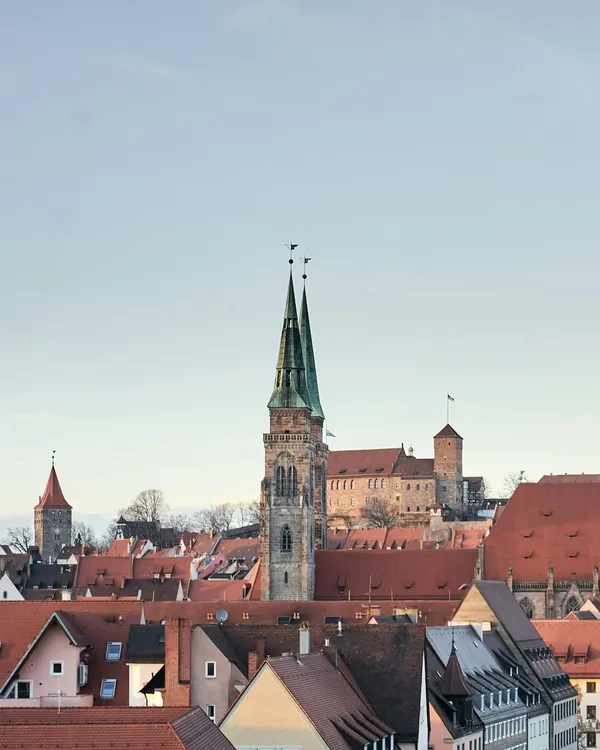
Living inside the medieval walls below the Kaiserburg

  • professionals
  • academics
  • car-free living

Few German cities let you live inside their medieval walls the way Nuremberg does. The Altstadt is enclosed by a long ring of walls, towers and gates, and divided by the Pegnitz into the Sebald side in the north, rising to the Kaiserburg, the imperial castle, and the Lorenz side in the south, with the main shopping streets. Much of the old town was destroyed in the Second World War and rebuilt, often following the old street plan, so sandstone churches and half-timbered houses stand alongside post-war apartment buildings.

Daily life here is about walking. The Hauptmarkt, with its fountain and the Frauenkirche, hosts markets throughout the year and the famous Christkindlesmarkt in December. Albrecht Dürer's House stands near the Tiergärtnertor below the castle, the Germanisches Nationalmuseum holds one of the largest collections of German art and cultural history, and the Pegnitz islands and bridges give the centre a calm, green corridor. Cafés, wine bars, Franconian taverns and small shops are spread across both halves of the old town, and the moat below the walls has gardens and paths.

Apartments in the Altstadt are popular with professionals, academics and anyone who wants to live in the middle of things without a car. The Sebald side, especially the streets below the castle, is generally quieter and more residential, while the Lorenz side around Königstraße is busier and more commercial. FAU's business and economics faculty is in the old town, and the Hauptbahnhof sits just outside the southern walls. Expect tourists in summer and during the Christmas market, limited parking and buildings of very different ages and standards.

Getting around The Hauptbahnhof is just outside the southern walls, U1 stations at Lorenzkirche and Weißer Turm serve the old town, and most of the Altstadt is walkable.

Search homes in Nuremberg

Gostenhof

GoHo: cafés, small shops and a creative crowd west of the walls

  • creatives
  • young professionals
  • students

Gostenhof lies just west of the Altstadt walls, beyond the Spittlertor, and for most of its history was a working-class district of tenement houses, workshops and small factories. Over the past couple of decades it has become Nuremberg's creative neighbourhood, nicknamed GoHo, with independent cafés, bars, vintage shops, design studios and small galleries settling between the older apartment houses. The population is mixed, with long-established families, immigrant communities, students and artists living side by side.

Daily life centres on the squares and side streets around Jamnitzer Platz and the main roads, where bakeries, Turkish groceries, restaurants and neighbourhood bars sit side by side. Fürther Straße, the long road towards Fürth, runs along the district's northern side, and the Palace of Justice, where the Nuremberg trials were held after the Second World War, stands not far to the west. The Plärrer, a major U-Bahn and tram interchange, is on Gostenhof's eastern edge, so the rest of the city is never far away.

Gostenhof appeals to young professionals, creatives and students who want character and short distances. Furnished apartments and rooms appear regularly, often in renovated older buildings, and the district is generally more affordable than the Altstadt or St. Johannis. The U1 stops at Gostenhof and Bärenschanze and runs both into the centre and out to Fürth. Some streets are busy and noisy, especially near the main roads, while the side streets are quieter. Check the condition of the building and the heating, as renovation standards vary widely from house to house.

Getting around The U1 stops at Gostenhof and Bärenschanze, and the Plärrer interchange on the district's eastern edge has U1, U2 and U3 trains as well as trams.

Search homes in Nuremberg

St. Johannis

Gardens, the Pegnitz meadows and a historic cemetery

  • families
  • professionals
  • couples
  • runners

St. Johannis lies just north-west of the Altstadt walls and is one of Nuremberg's most attractive residential districts. Its name comes from the Johannisfriedhof, a historic cemetery where Albrecht Dürer and other famous Nurembergers are buried, with rows of old gravestones decorated with bronze epitaphs. Along Johannisstraße, the Hesperidengärten, small Baroque gardens hidden behind the houses, recall the time when wealthy merchants kept summer residences here outside the city walls.

The Pegnitz flows along the district's southern edge, and the meadows of the Hallerwiese and the paths along the river are popular for walks, runs and summer afternoons on the grass. The streets are mostly lined with older apartment houses and some post-war buildings, with local bakeries, cafés, small shops and Franconian taverns. The atmosphere is calm and settled, with many families and long-term residents, and the Altstadt is only a short walk away through the Tiergärtnertor or along the river.

Apartments in St. Johannis attract professionals, academics, families and couples who want quiet and green space close to the centre. Furnished apartments appear for people on assignment and researchers, though demand is strong and good offers do not last long. Trams and buses connect the district with the Altstadt and the Hauptbahnhof, and the U-Bahn interchange at Plärrer is a short ride south. Nightlife is limited to restaurants and a few bars, so for a night out most residents walk into the old town or across to Gostenhof. In return, St. Johannis is one of the few central districts where summer evenings by the river feel almost rural.

Getting around Trams and buses connect St. Johannis with the Altstadt and the Hauptbahnhof, and the Plärrer U-Bahn interchange is a short ride south.

Search homes in Nuremberg

Nordstadt

Stadtpark, Maxfeld and quick U-Bahn rides into town

  • professionals
  • medical staff
  • families
  • students

The Nordstadt stretches north from the Altstadt walls and is one of Nuremberg's larger and more varied residential areas. Parts of it, such as Maxfeld, are lined with Gründerzeit apartment houses with decorated façades, while other streets are dominated by post-war buildings that replaced housing destroyed in the war. The district is practical rather than picturesque, but it is close to the centre, well connected and has a steady supply of rental flats of different sizes.

The Stadtpark is the district's green centre, a large park with old trees, lawns, playgrounds and a popular beer garden that fills on summer evenings. The streets around it are among the most sought-after in the Nordstadt. Local shopping streets have supermarkets, bakeries, cafés and restaurants, and the Altstadt with the Kaiserburg is a short walk south through the northern gates. The large North Hospital campus in the north-west of the district is a major employer, bringing doctors and nursing staff to the area.

Apartments in the Nordstadt suit professionals, students, medical staff and families who want a central location without the tourist crowds of the old town. Furnished flats appear regularly, often in well-kept buildings with balconies. The U2 and U3 meet at Rathenauplatz on the district's southern edge, and the U3 continues north through Maxfeld and Kaulbachplatz, so the Hauptbahnhof is a few minutes away. Main roads such as the ring road can be noisy, so check the exact address, and ask about heating in older buildings. Streets close to the Stadtpark are worth the extra search time.

Getting around The U2 and U3 meet at Rathenauplatz, the U3 continues through Maxfeld and Kaulbachplatz, and trams run along the main roads to the Altstadt and the Hauptbahnhof.

Search homes in Nuremberg

Südstadt

Large, diverse and well connected south of the Hauptbahnhof

  • students
  • interns
  • trade fair staff
  • newcomers

The Südstadt begins on the far side of the railway tracks from the Hauptbahnhof and covers a large area of densely built residential streets, including districts such as Galgenhof, Steinbühl, Gibitzenhof and St. Peter. Much of it was built up in the late nineteenth and early twentieth centuries for workers in the city's growing industries, and after the war many streets were rebuilt with simple apartment blocks. Today it is one of Nuremberg's most international areas, with families from all over the world, small businesses and a busy street life.

Aufseßplatz, a square surrounded by shops, is one of the Südstadt's centres, and the streets nearby have international supermarkets, bakeries, restaurants and cafés. In the south-east, the Volkspark Dutzendteich offers lakes, woodland and space for running and cycling, and the former Nazi party rally grounds with the Documentation Centre are a sobering reminder of the city's history. The Max-Morlock-Stadion, home of 1. FC Nürnberg, and the Zeppelinfeld, where the Rock im Park festival is held, are also in this part of the city.

The Südstadt is generally more affordable than the districts north of the Pegnitz, and furnished apartments and rooms appear for students, interns, young professionals and trade fair staff. The U1 runs through the district from the Hauptbahnhof via Aufseßplatz towards the Messe, which is also convenient for anyone working at the exhibition centre. Housing quality and noise vary considerably from street to street, so check the building, the heating and the surroundings before booking. For a well-connected base at a moderate cost, the Südstadt is worth a close look.

Getting around The U1 runs through the Südstadt from the Hauptbahnhof via Aufseßplatz towards the Messe, and trams and buses connect the rest of the district.

Search homes in Nuremberg

Choosing an area in Nuremberg

What are the best areas for students in Nuremberg?

Gostenhof (goho: cafés, small shops and a creative crowd west of the walls), Nordstadt (stadtpark, maxfeld and quick u-bahn rides into town) and Südstadt (large, diverse and well connected south of the hauptbahnhof). Every area above has its own section with transport and what the housing is like.

Where do young professionals and expats live in Nuremberg?

Altstadt (living inside the medieval walls below the kaiserburg), Gostenhof (goho: cafés, small shops and a creative crowd west of the walls), St. Johannis (gardens, the pegnitz meadows and a historic cemetery) and Nordstadt (stadtpark, maxfeld and quick u-bahn rides into town). Every area above has its own section with transport and what the housing is like.

Which parts of Nuremberg are quieter or good for families?

St. Johannis (gardens, the pegnitz meadows and a historic cemetery) and Nordstadt (stadtpark, maxfeld and quick u-bahn rides into town). Every area above has its own section with transport and what the housing is like.

Found your area? Search Nuremberg

Search 60 homes