Skip to content
FlatHunt Search Palma de Mallorca

Palma de Mallorca · neighbourhood guide

The best neighbourhoods in Palma de Mallorca to rent in

Where you live in Palma shapes your year as much as the island does. The old town puts the cathedral, markets and the transport hub at your door but comes with summer crowds; Santa Catalina trades sleep for restaurants and bars; Son Espanyolet is its quieter neighbour; Pere Garau is practical, multicultural and local; and Es Molinar puts the sea at the end of your street. The guides below explain how each area works for renters, including the details listings rarely mention.

Palma de Mallorca, Spain

Santa Catalina

Market, restaurants and the old sailors' quarter

  • young professionals
  • foodies
  • international newcomers

Santa Catalina lies just west of the old town, across the Avinguda d'Argentina, and it was for centuries the quarter of fishermen, sailors and the workers of the port. Its low, narrow houses with green shutters still line many of the streets, and the Mercat de Santa Catalina, one of the city's best-known food markets, remains its centre of gravity. Next door, the old windmills of Es Jonquet look over the bay from the edge of the neighbourhood.

Over the last two decades the area has become one of the most international parts of Palma, with restaurants from every continent, cocktail bars, bakeries and cafés filling the streets around the market and Carrer de Sant Magí. Housing is a mix of renovated townhouses, small flats in older buildings and newer apartment blocks towards the Passeig Marítim. Many buildings have no lift and some ground-floor flats can be dark, so ask about light, damp and noise, especially near the bar streets.

Living here means the old town, the seafront promenade and the marina are all within walking distance, and plenty of bus lines pass along the main avenues for trips to the airport or the university. Evenings are lively, particularly at weekends, but early mornings belong to the market traders. The Passeig Marítim, a few blocks south, is lined with a cycle path that runs along the bay in both directions. If you prefer quieter streets with the same character, look at Son Espanyolet just inland, or cross into the old town for historic buildings and grand squares.

Getting around EMT buses along the Passeig Marítim and Avinguda d'Argentina, with the old town and the seafront promenade within walking distance.

Search homes in Palma de Mallorca

Casc Antic (Old Town)

Cathedral, palaces and courtyards inside the old walls

  • history lovers
  • car-free living
  • short-term professionals

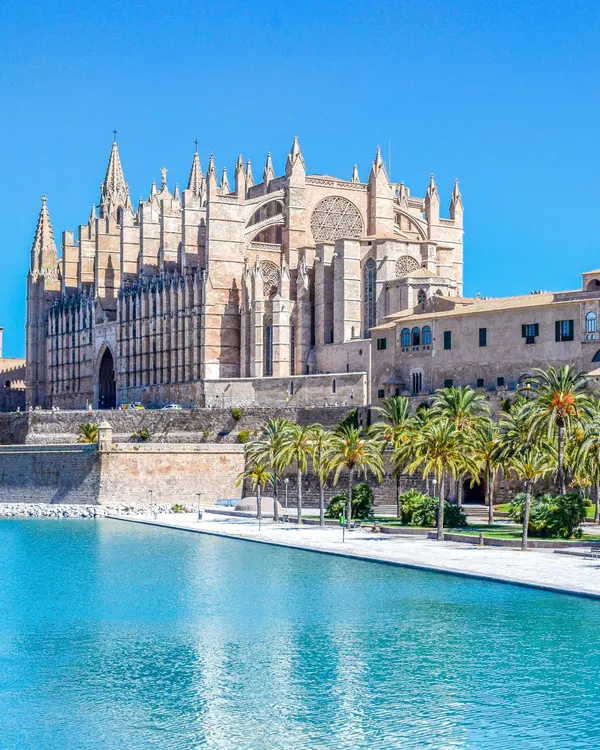
Palma's old town spreads behind the Gothic cathedral, La Seu, and the royal palace of the Almudaina, which together dominate the seafront. Inland, a maze of narrow lanes leads past noble houses whose stone courtyards, the patis, are one of the city's signatures, and on to Plaça Major, Plaça de Cort with the town hall and the shopping streets around the Passeig del Born. The quieter eastern part, around Sa Calatrava, slopes down towards the old city walls and the Parc de la Mar.

Homes range from flats in carefully restored mansions, with high ceilings, wooden beams and shuttered windows, to small apartments above shops in more ordinary buildings. Many have no lift and steep staircases, and older properties can be cold and humid in winter, so ask about heating and ventilation. Holiday rentals and hotels occupy a large share of the area, which means a lot of footfall in summer and the occasional noisy neighbour on a short stay. The Mercat de l'Olivar, the city's main covered market, sits on the northern edge of the old town near Plaça d'Espanya. Street noise varies a lot from lane to lane, so ask which way the bedrooms face.

For daily life the old town is hard to beat: museums, cinemas, cafés and markets are on foot, and Plaça d'Espanya, with the metro to the university and trains across the island, is at its northern edge. The trade-off is crowds and limited space. For a more local feel within walking distance, try Santa Catalina to the west or Pere Garau to the east.

Getting around Plaça d'Espanya on the northern edge for the metro to the UIB, SFM trains and many EMT bus lines, with the rest of the centre on foot.

Search homes in Palma de Mallorca

Pere Garau

Palma's multicultural market district

  • students
  • workers on a budget
  • longer stays

Pere Garau lies east of the old town, beyond the ring of avenues that follows the line of the demolished walls, and it is one of the most densely populated and diverse neighbourhoods in Palma. The heart of the area is the Mercat de Pere Garau, a busy covered market with an open-air section where you can buy fruit, vegetables, fish and meat at local prices, surrounded by Latin American, African and Asian groceries, bakeries and small restaurants.

Housing is mainly in apartment blocks from the mid-twentieth century onwards, many with several bedrooms and balconies, which is why shared flats are common. The streets are lived-in rather than polished, and some blocks are better kept than others, so look carefully at photos of the building and ask about the lift, insulation and noise from the street. In return you get a genuine neighbourhood, shops that stay open in winter and a community life that has little to do with tourism. Bars and cafés here are full of residents rather than visitors, and prices for everyday food and drink are noticeably lower than on the seafront.

The centre is a walk or short bus ride away, and the many EMT lines along the main avenues make it straightforward to reach Plaça d'Espanya for the metro and trains. Students who want to keep costs under control and workers who value convenience over charm often settle here. If you would rather live by the sea, Es Molinar is a short ride to the south-east, and the old town is close enough to walk to for dinner.

Getting around Many EMT bus lines along the surrounding avenues, with Plaça d'Espanya for the metro and SFM trains a short ride or a walk away.

Search homes in Palma de Mallorca

Es Molinar

Low fishermen's houses along the eastern seafront

  • remote workers
  • couples
  • runners and cyclists

Es Molinar stretches along the bay east of the centre, beyond the small harbour of Portixol, and it began as a village of fishermen and millers, hence the name. Its grid of streets running back from the sea is still lined with low houses, many painted in pale colours, and the seafront promenade that links Portixol with Ciutat Jardí is one of the most popular places in Palma for an evening walk, a run or a bike ride towards the cathedral.

The neighbourhood has changed considerably, with renovated houses, design hotels and seafood restaurants around Portixol, but away from the waterfront it remains residential and fairly quiet. Furnished rentals include small flats in converted houses, apartments in low blocks and the occasional whole townhouse. Homes close to the sea can suffer from humidity in winter, so ask about ventilation and heating. Summer brings more visitors to the promenade and the little beaches, but nothing like the crowds of the resort areas further east. Early mornings on the promenade belong to runners, dog walkers and the few fishermen who still keep boats in the harbour.

Getting into town takes a bike ride along the seafront or an EMT bus, and the airport is close, which is handy for people who travel often for work. Daily shopping is local, with bakeries, small supermarkets and bars along the inland streets. It suits remote workers, couples and anyone who wants the sea on the doorstep without leaving the city. For more city life, Pere Garau is inland, and the old town is a pleasant ride along the bay.

Getting around EMT buses towards the centre and the airport, with the seafront cycle and walking path into the old town.

Search homes in Palma de Mallorca

Son Espanyolet

Quiet low-rise streets above Santa Catalina

  • families
  • couples
  • remote workers

Son Espanyolet sits on the slope just inland from Santa Catalina, on the western side of the city, and it has kept much of the feel of the low-rise suburb it once was. Many streets are lined with one- and two-storey houses with small gardens or terraces, mixed with low apartment buildings, and life centres on a handful of squares, neighbourhood cafés and bakeries. It is popular with families and with international residents who want Santa Catalina's location without its nightlife.

Furnished rentals include flats in low buildings, rooms in shared houses and occasionally whole houses with outdoor space, which is rare this close to the centre. Streets are narrow and parking is hard, but most residents walk or cycle anyway. Older houses can be chilly and damp in winter, so ask about heating, insulation and how the windows close. The neighbourhood is quiet in the evenings, and in summer the terraces and patios really come into their own. Small parks and play areas make it one of the more family-friendly parts of central Palma, and neighbours tend to stay for years rather than seasons.

The Mercat de Santa Catalina and the seafront promenade are a short walk downhill, and the old town is within comfortable walking distance. EMT buses on the surrounding avenues connect with Plaça d'Espanya for the metro and trains, and with the western residential districts. For more restaurants and bars, head down to Santa Catalina; for historic buildings and the cathedral, continue into the old town.

Getting around EMT buses on the surrounding avenues towards Plaça d'Espanya, with Santa Catalina and the seafront a short walk downhill.

Search homes in Palma de Mallorca

Choosing an area in Palma de Mallorca

Where do young professionals and expats live in Palma de Mallorca?

Santa Catalina (market, restaurants and the old sailors' quarter), Casc Antic (Old Town) (cathedral, palaces and courtyards inside the old walls), Es Molinar (low fishermen's houses along the eastern seafront) and Son Espanyolet (quiet low-rise streets above santa catalina). Every area above has its own section with transport and what the housing is like.

Found your area? Search Palma de Mallorca

Search 55 homes