
Casco Antiguo
Medieval streets, pintxo bars and the San Fermín route
Pamplona's old town grew from three medieval burgos, Navarrería, San Cernin and San Nicolás, which were long rivals before being united into one city in the fifteenth century. Today they form a compact grid of narrow streets inside the ramparts, held together by Plaza del Castillo, the city's main square, with its arcades and historic cafés. Calle Estafeta, the final stretch of the San Fermín bull run, leads towards the bullring, and the Gothic cathedral of Santa María stands at the highest point, close to the walls.
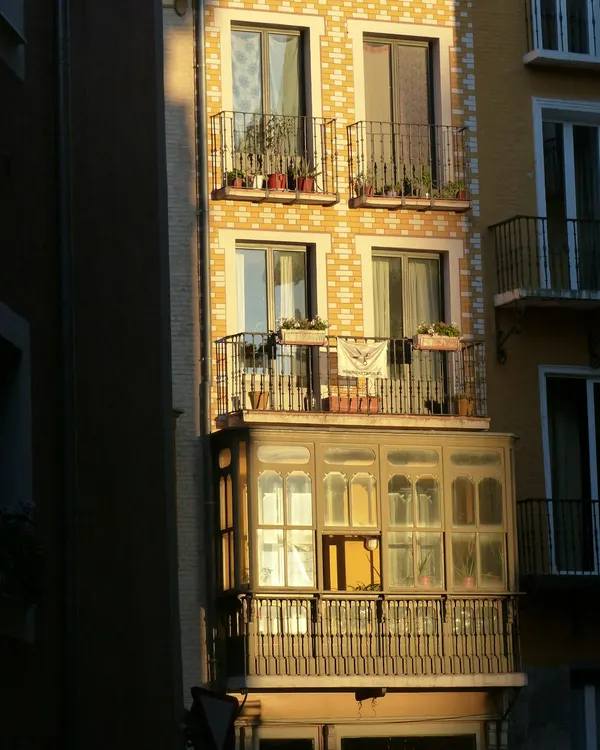
Housing is mostly in tall, narrow buildings with wooden balconies, often several centuries old and divided into flats over four or five floors. Some have been carefully renovated with lifts, but many still have steep staircases, small kitchens and thin walls. Shared flats are common among students who want to live where the life is, and whole apartments suit those staying for a shorter period. The bar streets, especially San Nicolás and Estafeta, are lively at weekends and loud in July, so ask where the bedrooms face.
In return you get the best of the city on foot: markets, pintxo bars, the town hall square, the Taconera gardens and the walls, with walking routes down to the Arga river. Buses run from the edges of the old town to both campuses. During San Fermín many residents leave or rent out their flats, so check how your contract treats those days. For calmer streets nearby, look at the Segundo Ensanche, just south of the walls.
Getting around Walkable to the centre and the Ensanche, with villavesa buses from the edge of the old town to both university campuses.