Cedofeita stretches north-west from Praça Carlos Alberto, and its spine is Rua de Cedofeita, a pedestrian shopping street of old shopfronts, haberdashers and pastelarias. One block over, Rua Miguel Bombarda is Porto's gallery street, packed with contemporary art spaces, vintage shops and concept stores. A few times a year the galleries open their new shows on the same Saturday afternoon, and the whole street turns into a slow-moving party that spills into the neighbouring cafés. Away from these two streets the parish turns residential, with quiet lanes, small squares and the Romanesque church of São Martinho de Cedofeita, one of the oldest in the city.
Getting around Carolina Michaëlis and Lapa stations on metro lines A, B, C, E and F, with Trindade and Casa da Música both within walking distance.
Living in Cedofeita · 360 furnished homes
If Porto has a downtown, this is it. Santo Ildefonso takes in the shopping street of Rua de Santa Catarina, the Belle Époque Café Majestic, the blue-tiled Capela das Almas and the Mercado do Bolhão, reopened after a long restoration with its stalls of fish, flowers and cured meats. Praça da Batalha, home to the Teatro Nacional São João, marks the southern edge of the parish, just above the cathedral and the old town. The façades along Santa Catarina, many tiled or carved in granite, are some of the most photographed in Porto.
Getting around Bolhão and Trindade metro stations for lines A, B, C, E and F, plus the yellow D line at Trindade, with São Bento railway station nearby.
Living in Santo Ildefonso · 337 furnished homes
Paranhos spreads across the northern part of Porto, and for many students it is the whole point of the city. The Asprela campus gathers the University of Porto's faculties of engineering, economics, medicine, dental medicine and sport, alongside the Polytechnic's engineering school, ISEP, all next to Hospital de São João. During term the area fills with students heading between lectures, libraries and the canteens, and empties noticeably in August. The campus also hosts a science and technology park and research institutes, so many postgraduate researchers live nearby too.
Getting around Yellow D metro line at Hospital São João, Pólo Universitário, Salgueiros, Combatentes and Marquês, plus frequent STCP buses into the centre.
Living in Paranhos · 309 furnished homes
Bonfim begins where the commercial centre fades out east of Batalha, and for generations it has been a working-class parish of tiled terraces, small grocers and neighbourhood tascas serving lunch to regulars. In recent years it has drawn artists, young families and a wave of new cafés, bakeries and studios, especially around Campo 24 de Agosto and the streets towards Rua do Heroísmo, without losing its local, slightly unpolished character. Food shops, hardware stores and neighbourhood associations still line the main streets, and many residents know each other by name.
Getting around Campo 24 de Agosto and Heroísmo stations on metro lines A, B, C, E and F, with Campanhã station on the eastern edge for intercity and suburban trains.
Living in Bonfim · 218 furnished homes
Vitória is postcard Porto: the baroque Clérigos Tower, the neo-Gothic Livraria Lello with its queues of visitors, the Cordoaria garden and the steep lanes of the old Jewish quarter. It lies within the UNESCO-listed historic centre, and on a sunny afternoon its streets fill with tourists, students heading to the university's historic rectorate building and locals queuing for a francesinha, the city's famously heavy sandwich. Early in the morning, before the crowds, it is quiet enough to hear trams rattling past Carmo, and nearby Rua das Flores, lined with restored merchants' houses, runs down towards the river.
Getting around São Bento and Aliados stations on the yellow D metro line, São Bento railway station, and tram 22 stopping at Carmo.
Living in Vitória · 97 furnished homes
Ramalde is where Porto starts to feel like a place people live in rather than visit. The parish covers a broad swathe of the western city north of Avenida da Boavista, with streets of modern apartment buildings, small supermarkets, schools and neighbourhood cafés where the same faces turn up every morning. Boavista FC's Estádio do Bessa sits on its southern side, and on match days the surrounding streets fill with supporters. It is not a place for sightseeing, and that is exactly why residents like it.
Getting around Francos, Ramalde and Viso stations on metro lines A, B, C, E and F, connecting to Casa da Música and Trindade in a few stops.
Living in Ramalde · 81 furnished homes
Massarelos drops from the high ground around the Palácio de Cristal gardens, with their peacocks, rose beds and sweeping river views, down to the Douro waterfront. Along the river runs the historic tram line towards Foz, and the Tram Museum occupies a former power station by the water. Uphill to the west, the Campo Alegre area concentrates university buildings, including the Faculty of Sciences and Álvaro Siza's celebrated Faculty of Architecture on the slope above the river. The gardens also host the city book fair and concerts at the Super Bock Arena, the domed pavilion at their centre.
Getting around Historic trams 1 and 18 along the river and up towards Carmo, plus STCP buses; the nearest metro stations are in Cedofeita and the centre.
Living in Massarelos
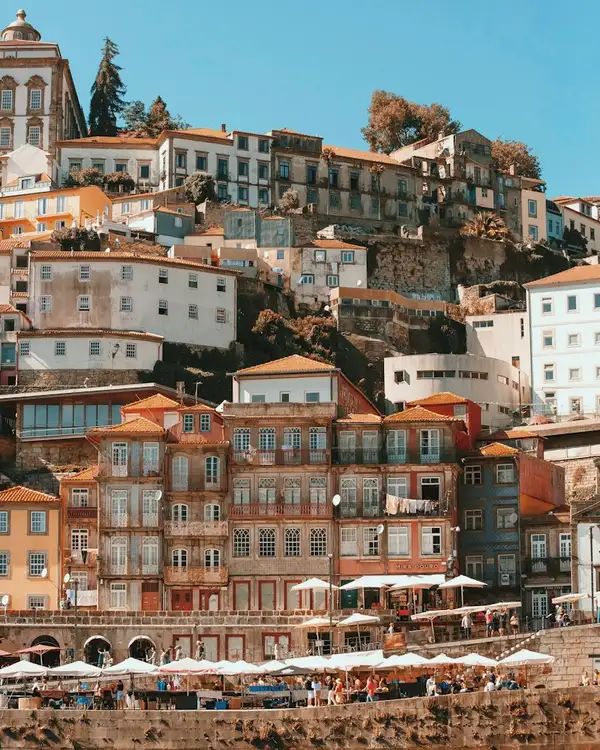
Sé is the hill where Porto began. The fortress-like cathedral crowns the top, its terrace looking out over orange roofs to the port wine lodges in Gaia, and from there a tangle of stepped alleys falls through the Barredo quarter towards the Ribeira waterfront. The upper deck of the Dom Luís I Bridge leaves from the edge of the parish, carrying the yellow metro line and a steady stream of pedestrians high above the gorge. The cathedral square, the Terreiro da Sé, is a favourite viewpoint at sunset.
Getting around São Bento metro (yellow D line) and railway station at the foot of the hill, with Jardim do Morro station just across the Dom Luís I Bridge.
Living in Sé