
Centro Storico
The hexagon of streets inside the viali
Reggio Emilia's historic centre has an unusual shape: the old walls formed a hexagon, and the ring of viali that replaced them still marks its edge. Inside, the Via Emilia cuts straight through, and the city's life gathers around two connected squares. Piazza Prampolini, which locals still call Piazza Grande, holds the cathedral and the town hall with the Sala del Tricolore, where the green, white and red flag was adopted in 1797. Next door, Piazza San Prospero is lined with cafés and fills with market stalls.
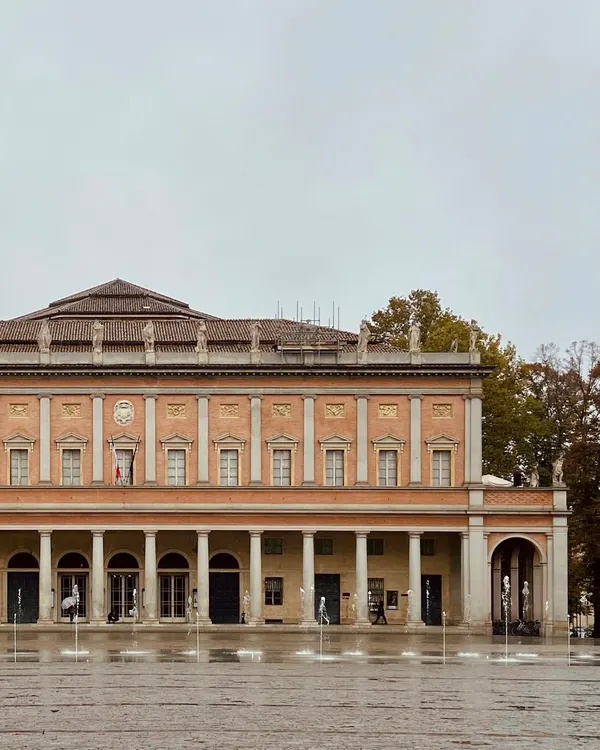
The centre is compact enough to cross on foot in a few minutes, and many streets have porticoes that make walking pleasant in rain or summer heat. The Teatro Municipale Romolo Valli and the Teatro Ariosto anchor the cultural life, the Parco del Popolo offers a green space on the northern side, and every spring the Fotografia Europea festival spreads exhibitions across palazzi and courtyards. Unimore has teaching buildings in and around the centre, so students are part of everyday street life.
Housing means older buildings: flats in palazzi with high ceilings, beams in the top floors and, often, no lift. Large apartments are commonly shared, and rooms inside the viali are the first to go before each semester. Car traffic is restricted in much of the centre, which keeps it quiet, but it also makes a bike the most practical way around. The central station is a short walk from the northern edge. If the centre is full, compare the districts in our neighbourhood guide.
Getting around Walkable end to end; SETA buses run along the viali around the centre, and the central station is a short walk from the northern edge.