
Sintra Vila
Palaces, forest and the historic town centre
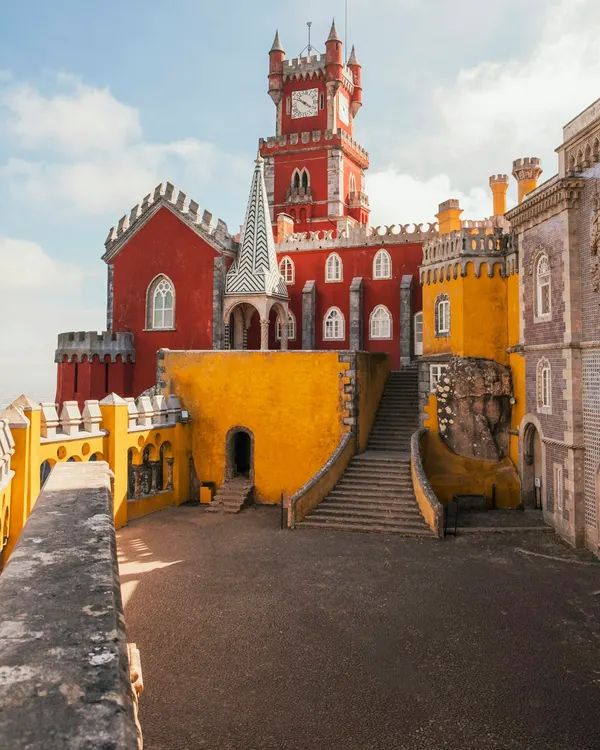
Sintra Vila is the historic heart of the municipality, built on the northern slopes of the Sintra hills. The National Palace, with its two tall conical chimneys, dominates the main square, and narrow lanes climb from there past cafés, bakeries selling queijadas and travesseiros, and nineteenth-century villas. Above the town, the Moorish Castle and the Pena Palace crown the hills, and the Quinta da Regaleira, with its gardens and initiation well, is a short walk away. The whole area is part of a UNESCO World Heritage cultural landscape.
Living here means beauty with some practical trade-offs. Housing is mostly older townhouses and small apartment buildings, many on steep streets, with some flats in restored villas. Furnished homes suit remote workers, writers and couples who want forest walks and quiet evenings once the day visitors have left. The microclimate is cool and humid, with frequent mist, so damp is a real issue in older buildings: ask about heating, dehumidifiers and ventilation. Parking is limited and traffic is restricted in parts of the town, especially at weekends and in summer.
The train station is a short walk from the centre, with direct trains to Lisbon, and local buses climb to the palaces and run out to the beaches at Praia Grande and Praia das Maçãs. Everyday shopping is limited in the historic centre itself, so many residents rely on the supermarkets in nearby Portela de Sintra. If you commute daily and want shorter train journeys, look further east along the line at Queluz or Massamá.
Getting around Sintra station at the end of the Sintra line for trains to Lisbon, with local buses to the palaces, Portela de Sintra and the beaches.