Skip to content
FlatHunt Search Tübingen

Tübingen · neighbourhood guide

Where to live in Tübingen: a neighbourhood guide

Tübingen is small, but its hills shape daily life more than distance does. The humanities and the university's historic buildings are in and around the old town, while the sciences and the university hospital sit on the hills to the north, so the right district depends on where you study or work. The Altstadt is central and lively, Lustnau calmer, the Südstadt close to the station, and Waldhäuser-Ost next to the science campus. Each profile below covers housing, buses and the trade-offs.

Tübingen, Germany

Altstadt

Half-timbered old town between the Neckar and the castle

  • students
  • car-free living
  • humanities scholars

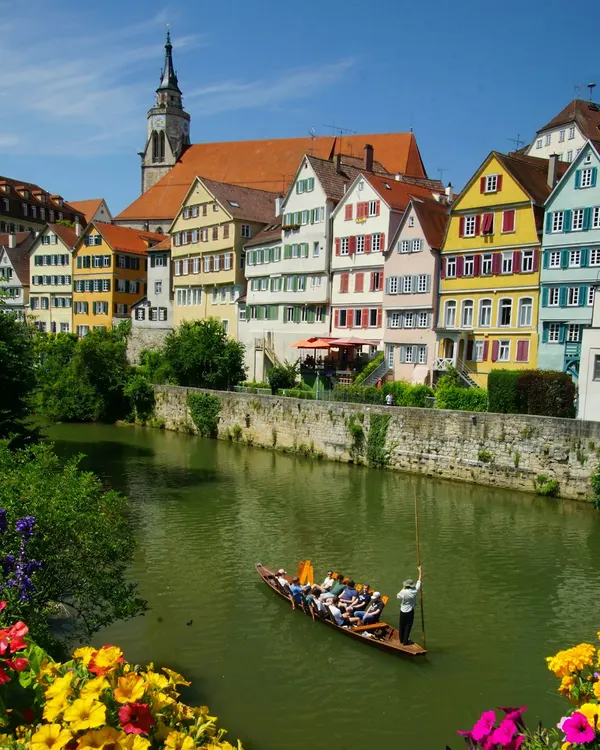
The Altstadt is the Tübingen on postcards. Narrow lanes of half-timbered houses climb from the Neckar to the Marktplatz with its painted town hall, and on up to Schloss Hohentübingen, the castle that now houses university collections. Along the river, the Hölderlin tower and a row of colourful houses face the Neckarinsel with its long avenue of plane trees, and in summer the wooden punts known as Stocherkähne glide past. The old town is compact enough to cross on foot in a few minutes.

Student life is woven through it. The Stiftskirche, the historic Evangelisches Stift and older university buildings sit among cafés, bookshops, bakeries and bars, and the streets towards the Wilhelmstraße and the university's main building fill with students at lunchtime. Weekly markets on the Marktplatz, summer evenings on the steps by the river and events throughout the academic year mean the old town rarely feels empty during term, and it calms down during the breaks.

Living here is a privilege with some catches. Flats are scarce and often small, with sloping ceilings, steep staircases and little sound insulation in old timber buildings. Bars and late-night foot traffic are noisy on some lanes, and parking is practically impossible. On the other hand, you can walk to lectures in the old buildings, the station is just across the river, and buses up to the Morgenstelle leave from nearby. Furnished rooms come up mostly as semester sublets, so search early and confirm you can register at the address. Ask, too, what the rent includes for heating, since older timber houses can be costly to keep warm in winter.

Getting around Most of the old town is walkable, the Hauptbahnhof lies just across the Neckar bridge, and city buses run from the edge of the Altstadt to the hillside campuses.

Search homes in Tübingen

Lustnau

Former village east of the centre, calmer and more spacious

  • students
  • researchers
  • families

Lustnau lies east of the old town in the Neckar valley and was an independent village until it was incorporated into Tübingen in the 1930s. Its old centre still has a village character, with a church, older farmhouses and small streets, while the rest of the district has grown with apartment buildings, terraced houses and newer developments over the decades. It feels like a small town of its own, with bakeries, supermarkets, schools and local clubs.

For many Tübingen residents, Lustnau is the sensible compromise. It is calmer and usually more spacious than the old town, but still close: buses run frequently into the centre, and cycling along the valley floor is flat and easy. The hillside campuses at the Morgenstelle and the university hospital are within reach by bus or by a steeper ride uphill, and the woods of the Schönbuch nature park begin at the edge of town for walks and running. Evenings are quiet, with a few local restaurants rather than a bar scene.

Students, doctoral researchers and families all live here, and shared flats and furnished rooms appear in both older houses and newer apartment blocks. Demand is steady, especially before the October semester, so set up a search and be ready to book. Check how close a listing is to a bus stop with direct lines to your faculty or the hospital, since a change in the centre adds time. If you want to be in the middle of student life, compare Lustnau with the Altstadt in our neighbourhood guide.

Getting around Frequent city buses link Lustnau with the old town and the Hauptbahnhof, and lines run up to the Morgenstelle and the university hospital.

Search homes in Tübingen

Südstadt

French Quarter, Loretto and the station side of the Neckar

  • families
  • professionals
  • rail commuters

The Südstadt lies across the Neckar from the old town and begins right at the Hauptbahnhof. For decades the area was shaped by barracks used by the French army after the Second World War. When the troops left in the early 1990s, the city turned the sites into new neighbourhoods, the Französisches Viertel and Loretto, which became well known among planners for mixing homes, small businesses and shops on car-light streets, with many buildings designed by groups of future residents.

The result is a district with a distinctive feel: courtyards full of bikes and children, ground-floor workshops and cafés, and squares that work as shared living rooms. Older parts of the Südstadt and neighbouring Derendingen add more conventional apartment buildings and houses, with supermarkets and everyday services along the main roads. The Neckar and its riverside paths are close for running and cycling, and the station puts regional trains to Stuttgart and the surrounding towns within a short walk.

For renters, the Südstadt suits families, professionals and students who want a practical, community-minded base. The old town is a short walk across the bridge, and buses run from the station to the hillside campuses. Many flats here are owner-occupied or let long-term, so furnished rentals are limited; when one appears, check the contract length and whether you can register at the address. Commuters who work in Stuttgart or Reutlingen often find the station location a strong argument for living on this side of the river, since trains leave a few minutes from the front door.

Getting around The Hauptbahnhof is on the district's northern edge, with regional trains towards Stuttgart and city buses to the old town and the hillside campuses.

Search homes in Tübingen

Waldhäuser-Ost

Hilltop estate with large student halls near the Morgenstelle

  • science students
  • researchers
  • hospital staff

Waldhäuser-Ost, known locally as WHO, sits on the hill north of the old town and was built mainly from the late 1960s and 1970s as a planned estate of high-rise and mid-rise blocks. It is home to some of Tübingen's largest student residences, which gives the district an unusually young population, alongside families and older residents who have lived in the estate's flats for decades.

Its location is its strongest point. The Morgenstelle, where the university's natural sciences are concentrated, is close by, and the university hospital on the Schnarrenberg is not far. The forest of the Schönbuch begins right at the edge of the estate, with paths for running, cycling and walks, and the views from the upper floors stretch across the valley to the Swabian Jura on clear days. Shops in the estate cover groceries and everyday needs, and student clubs and parties in the halls fill the social calendar during term.

WHO is the practical choice for science students, doctoral researchers and hospital staff who want a short walk to the lab or the ward. The buildings are functional rather than charming, and the centre is a bus ride down the hill rather than a stroll. Rooms in the halls are allocated by the Studierendenwerk and go quickly before the October semester, so many newcomers bridge the gap with a furnished room or sublet from a rental platform. Check the bus connection to the old town if you plan to go out in the evenings, and ask whether a room is in a hall with shared kitchens on each floor or in a private flat in one of the residential blocks.

Getting around City buses run frequently between Waldhäuser-Ost, the Morgenstelle, the old town and the Hauptbahnhof.

Search homes in Tübingen

Choosing an area in Tübingen

What are the best areas for students in Tübingen?

Altstadt (half-timbered old town between the neckar and the castle), Lustnau (former village east of the centre, calmer and more spacious) and Waldhäuser-Ost (hilltop estate with large student halls near the morgenstelle). Every area above has its own section with transport and what the housing is like.

Which parts of Tübingen are quieter or good for families?

Lustnau (former village east of the centre, calmer and more spacious) and Südstadt (french quarter, loretto and the station side of the neckar). Every area above has its own section with transport and what the housing is like.

Found your area? Search Tübingen

Search 13 homes