Skip to content
FlatHunt Search Alicante

Alicante · neighbourhood guide

Where to live in Alicante: neighbourhoods for students and expats

Choosing where to live in Alicante comes down to one question: how much do you care about being near the beach versus near the university? The campus is in San Vicente del Raspeig, connected to the city by TRAM line 2, so central areas such as Ensanche and Carolinas balance both, the old town wins on atmosphere, and Playa de San Juan wins on space and sea. Remote workers have the most freedom; students should map their journey to campus before booking anything.

Alicante, Spain

Centro & Casco Antiguo

Castle views, El Barrio's bars and Postiguet beach on the doorstep

  • Erasmus students
  • remote workers
  • night owls

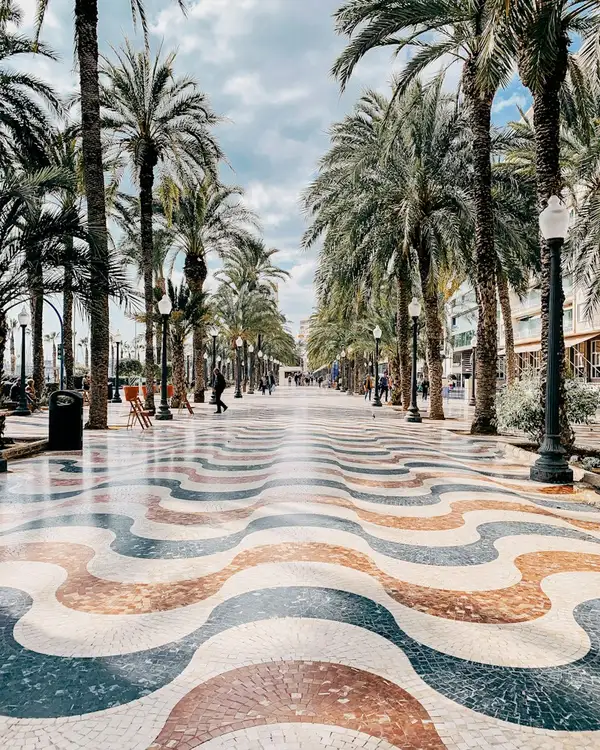
The historic centre climbs from the Rambla de Méndez Núñez up the slopes of Monte Benacantil, crowned by the Castillo de Santa Bárbara. Its oldest corner, the Barrio de Santa Cruz, is a cluster of whitewashed houses, steps and flowerpots that looks more Andalusian village than port city. Below it, the grid of streets known simply as El Barrio holds most of Alicante's bars and late-night spots, and the palm-lined Explanada de España and the Postiguet beach are a few minutes away on foot.

Living here means trading sleep for location. On weekend nights, and on most nights in summer, El Barrio is loud until the early hours, and during the Hogueras de San Juan in June the whole centre becomes one long street party, ending with the bonfires being burnt on the night of San Juan. Buildings are older, often without lifts, and some rooms open onto narrow streets with little direct light. Upper floors and streets off the main bar routes are noticeably calmer, so ask exactly where a flat sits before booking.

For a first semester, though, the centre is hard to argue with. The Mercado Central is close by for food shopping, Luceros and its TRAM interchange are within walking distance, and getting to the university is a single line 2 journey from there. Interns working in the city and remote workers who want the beach before breakfast tend to stay longer. Rooms here make up a good share of the Alicante room listings, especially in the blocks between the Rambla and Avenida Alfonso X el Sabio.

Getting around Walk to Luceros for TRAM line 2 to the university; coastal TRAM lines leave from the same interchange.

Search homes in Alicante

Ensanche-Diputación

Grid streets, lifts and Luceros on the corner

  • students
  • interns
  • longer stays

Ensanche-Diputación is the orderly part of central Alicante: a grid of wide streets laid out west of the old town, running along Avenida Maisonnave and Avenida de Federico Soto and wrapping around Plaza de los Luceros with its fountain. This is where locals come to shop, bank and run errands, and where office workers spill into cafés at breakfast time. It feels like a working city rather than a holiday one, which is exactly why many longer-stay renters like it.

The housing is mostly mid-twentieth-century and later apartment blocks with lifts, doormen in some buildings and generously sized flats that divide well into rooms. Bedrooms tend to be more regular than in the old town, and kitchens are more likely to have been updated. Traffic noise on the main avenues is the main thing to watch for; rooms facing an inner courtyard are quieter, if darker. The Mercado Central and the beach are both a comfortable walk, as is the main railway station.

Transport is the clinching argument. Luceros is the hub of the TRAM network, so line 2 to the university and the coastal lines to Playa de San Juan and beyond all start practically on your doorstep. That makes Ensanche a good compromise for students who want to live in the city but still reach campus without fuss, and for interns whose offices are in the centre. If you plan to go out in El Barrio, you can be there in minutes and still sleep in a quieter street. Compare it with the other central options in the Alicante neighbourhood guide.

Getting around Luceros TRAM interchange for line 2 to the university and the coastal lines; the main railway station is walkable.

Search homes in Alicante

Benalúa

Calm grid streets between the railway station and the port

  • interns
  • postgraduates
  • quiet sharers

Benalúa is one of those neighbourhoods visitors pass through on their way from the railway station without noticing, and locals rather like it that way. Laid out as a planned residential district in the late nineteenth century, it keeps a regular grid of streets lined with low-rise blocks, small squares and family-run businesses. It sits between the main station on Avenida de Salamanca and the port, so the Explanada and the old town are a straightforward walk along the seafront.

Life here is quieter than in the centre. Mornings start with neighbours at the bakery and the café on the corner, and evenings end early on most streets, which suits people who work or study long days. The housing stock mixes older buildings, some with traditional balconies, and newer blocks that replaced them, so quality varies from flat to flat. As always in Alicante, ask how a room is heated and cooled, and whether the windows are double-glazed; buildings close to the main roads and the station area can pick up traffic noise.

For getting around, Benalúa has the advantage of the railway station for weekend trips to Valencia or Madrid, plus buses towards the centre and the university. Reaching campus usually means walking or taking a bus to Luceros and changing to TRAM line 2, a little more effort than from Ensanche. In return you get calmer streets and a neighbourhood that still feels like everyday Alicante. Interns, postgraduates and anyone staying a full year often find it a good fit; check what is currently listed among the rooms for rent in Alicante.

Getting around Next to the main railway station, with city buses to Luceros for TRAM line 2 and a short walk to the Explanada.

Search homes in Alicante

Carolinas

Dense, local and multicultural, north of the centre

  • budget sharers
  • students
  • Spanish learners

North of the centre, the streets of Carolinas Altas and Carolinas Bajas rise gently away from the sea in a tight grid of apartment buildings. This is one of Alicante's most densely built and most international neighbourhoods, with long-established Spanish families living alongside newer arrivals from North Africa, Latin America and elsewhere. Grocery stores, kebab shops, Latin American bakeries and traditional bars line the same blocks, and the result feels lived-in rather than polished.

Students choose Carolinas mostly for practical reasons. It is close enough to walk into the centre, yet sits on the side of the city facing the university, so reaching campus by TRAM line 2 or bus is straightforward. Flats are typically in buildings from the 1960s and 1970s, sometimes without lifts, and many have been divided into rooms for students and young workers. Finishes vary, so look carefully at photos of the kitchen and bathroom, and ask about air conditioning: summer nights in a top-floor flat without it are long.

This is not the neighbourhood for sea views or a polished café scene. It is, however, one of the better places in Alicante to practise everyday Spanish, find a reasonable menú del día and live among people who are not on holiday. Streets are busy during the day with shoppers and school runs, and generally calm at night. If your budget is tight or you want a straightforward base for the university without moving out to San Vicente, Carolinas is worth comparing with Ensanche in the neighbourhood guide.

Getting around City buses to the centre and campus, with TRAM line 2 within reach for the university.

Search homes in Alicante

Playa de San Juan

Kilometres of sand, quiet winters and holiday flats let by the term

  • remote workers
  • beach lovers
  • academic-year stays

Playa de San Juan is the long, straight sweep of sand north of the city, backed by a strip of apartment towers, terraces and residential streets that run inland towards the Cabo de las Huertas headland. In July and August it is packed with Spanish holidaymakers. From October to May it turns quiet: joggers on the promenade, a few beach bars open at weekends and plenty of parking. That seasonal swing is the key to renting here.

Many apartments in Playa de San Juan are second homes or holiday lets. Rather than leave them empty for the winter, owners often rent them out from September to June, sometimes as whole flats and sometimes room by room to students. These flats tend to be newer and roomier than those in the centre, often with a terrace, a community pool and air conditioning. The catch is the end date: expect to move out before the summer season, when the same flat earns more as a holiday rental.

Getting around takes some planning. Coastal TRAM lines run along the area and into Luceros in the centre, where you change to line 2 for the university, so the daily campus trip is longer than from anywhere in the city. Nightlife means heading into town, and winter evenings can feel sleepy. For remote workers who want sea air and space, and for students happy to commute in exchange for a beach at the end of the street, it can be an excellent year. Look for rooms in Playa de San Juan among the Alicante rooms and check every contract's end date.

Getting around Coastal TRAM lines connect with Luceros in the centre, where line 2 continues to the university.

Search homes in Alicante

San Vicente del Raspeig

The university town next door, a short walk from campus

  • UA students
  • early risers
  • academic-year stays

San Vicente del Raspeig is its own municipality, but for thousands of students it is simply where the university is. The Universidad de Alicante campus, with its pine trees, modern faculty buildings and wide walkways, sits on the edge of town, and the streets nearest to it are full of shared flats, copy shops, cheap bars and late-opening supermarkets geared to student life. Living here means being able to walk to an early lecture or to the library on a Sunday.

The town itself is residential and fairly calm, with a central square, a weekly market and the everyday services you would expect, from health centres to gyms. Flats are mostly in modern apartment blocks, often with lifts and sometimes with a shared pool, and landlords are very used to letting rooms for the academic year. Spanish students from elsewhere in the region make up a large part of the population, which helps if you want to practise the language beyond class.

The trade-off is distance from the sea and from Alicante's nightlife. TRAM line 2 links San Vicente with Luceros in the city centre, and night-time options are more limited, so a big night in El Barrio needs planning. Many students solve this by living in San Vicente in their first semester, when classes and new friends are centred on campus, and moving into the city later. If being close to lectures matters more than being close to the beach, start by comparing rooms here in the Alicante student room search.

Getting around Walk to the Universidad de Alicante campus; TRAM line 2 runs to Luceros in central Alicante.

Search homes in Alicante

Choosing an area in Alicante

What are the best areas for students in Alicante?

Centro & Casco Antiguo (castle views, el barrio's bars and postiguet beach on the doorstep), Ensanche-Diputación (grid streets, lifts and luceros on the corner), Carolinas (dense, local and multicultural, north of the centre) and San Vicente del Raspeig (the university town next door, a short walk from campus). Every area above has its own section with transport and what the housing is like.

Where do young professionals and expats live in Alicante?

Centro & Casco Antiguo (castle views, el barrio's bars and postiguet beach on the doorstep) and Playa de San Juan (kilometres of sand, quiet winters and holiday flats let by the term). Every area above has its own section with transport and what the housing is like.

Found your area? Search Alicante

Search 137 homes