
The complete guide
Renting & Living
in Berlin
Everything you need to know about finding a home in Berlin. Neighborhoods, prices, tips and the rental process — all in one place.
Berlin Neighborhood Guide
Explore Berlin's neighborhoods and find the perfect area for your lifestyle.
View all neighborhoods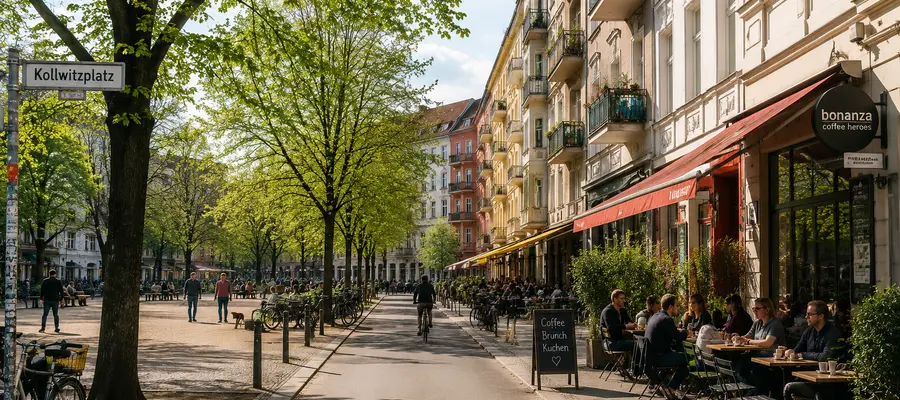
01 — The big picture
Berlin is many housing markets, not one.
The price and type of home you can find depend on neighborhood, size, building, furnishing, contract type and how long you plan to stay. A €1,500 budget can look completely different in Mitte and in an outer district.
Competition
Popular apartments can attract many applicants. Being prepared before you start viewing can make a real difference.
Neighborhood matters
Berlin's districts contain very different Kieze. Look beyond the district name and understand the local area around the apartment.
Housing is fragmented
Long-term apartments, furnished rentals, WGs, student housing and temporary homes follow different rules and have different requirements.
FlatHunt brings furnished apartments, studios and rooms from multiple providers into one search.
02 — Money
How much does housing cost in Berlin?
There is no single rent number that describes Berlin. Compare the total cost, not only the advertised base rent.
Kaltmiete
The basic rent before additional operating costs.
Other monthly costs
Electricity, internet and the public broadcasting contribution may be separate.
Nebenkosten
Operating costs included in the agreement, which may include heating, water, waste collection and building services.
Kaution
The rental deposit. Always check the amount and payment terms in the contract.
Warmmiete
Kaltmiete plus the operating costs included in the rental agreement.
Furnished apartments
Furnished apartments are often more expensive than unfurnished long-term rentals, but can save the cost and effort of furnishing an apartment yourself.
What can different budgets mean?
Often rooms, WGs, smaller studios or locations farther from the center.
More rooms and studios, with more choice outside the most expensive areas.
A wider choice of studios and apartments, especially if you're flexible on location.
More options for couples, better-connected areas and higher-quality furnished homes.
A broader selection, particularly for larger or premium homes.
03 — Choose your home
What kind of housing do you need?
Choosing the right housing type first makes your neighborhood search much easier.
Furnished apartment
Move-in ready and often flexible. Particularly useful for newcomers, expats, students and temporary stays.
- Furniture included
- Often flexible terms
- Usually higher monthly cost
Unfurnished apartment
The conventional long-term option. Usually cheaper, but you may need to furnish and equip the home yourself.
- Often longer-term
- Lower ongoing rent in many cases
- Higher initial setup cost
Studio / 1-Zimmer
One main living/sleeping room plus bathroom and kitchen or kitchenette. Popular with singles and students.
- Compact
- Often centrally located
- Good for one person
Apartment / 2+ Zimmer
German room counts refer to actual rooms. A 2-Zimmer-Wohnung can mean a living room and bedroom; kitchen and bathroom normally do not count.
WG
Wohngemeinschaft: you normally rent a private room and share kitchen, bathroom and sometimes living room.
Temporary housing
Furnished apartments, serviced apartments and Zwischenmiete can be useful when you have just arrived and need a base while searching for a longer-term home.
Browse furnished homes04 — Berlin architecture
Altbau or Neubau?
Berlin's housing stock ranges from ornate Gründerzeit buildings to modern developments. Neither is automatically better.
Altbau
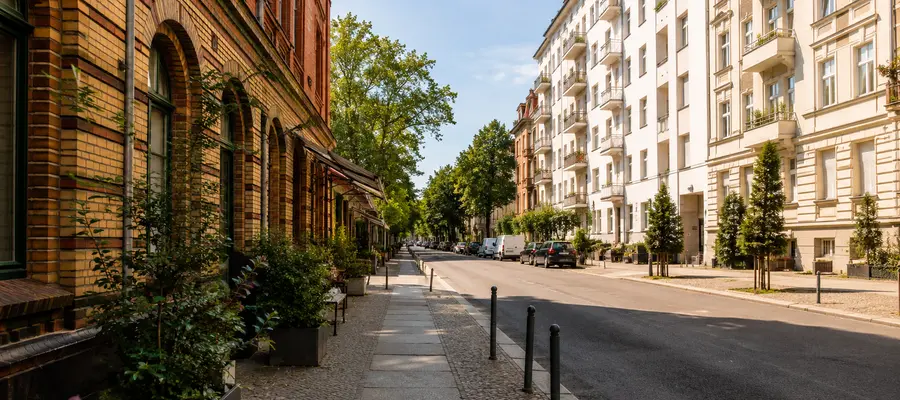
Historic buildings, often associated with high ceilings, large windows, wooden floors, decorative façades and courtyards.
- Character and historic architecture
- Often generous room proportions
- Some buildings have less insulation or no elevator
- Condition varies greatly after renovation
Neubau
Modern buildings can offer better insulation, elevators, contemporary bathrooms and greater energy efficiency.
- Modern building standards
- Often better energy efficiency
- Usually more modern amenities
- Can have smaller rooms or higher rents
05 — Berlin, neighborhood by neighborhood
Find the Kiez that fits your life.
Berlin has 12 administrative districts, but everyday life happens at the neighborhood and Kiez level. Two streets in the same district can feel completely different.
Mitte
Central · International · Urban
Mitte is Berlin's historic and geographic center, with museums, galleries, restaurants, offices, universities and excellent public transport. Humboldt University's central campus is here, and many international companies are within easy reach. The area around Hackescher Markt and Museum Island is more touristy, while streets around Linienstraße, Rosenthaler Platz and Invalidenstraße feel more residential. It is one of the easiest areas for a newcomer who wants maximum connectivity.
+ International, convenient for HU and central offices
− Noise and petty theft around major hubs
Kreuzberg
Creative · Multicultural · Lively
Kreuzberg is one of Berlin's most recognizable neighborhoods: multicultural, creative and full of cafés, restaurants, bars, markets, canals and cultural venues. Bergmannkiez, Graefekiez and the Landwehrkanal area have distinct local atmospheres, while Kottbusser Tor and Görlitzer Park are much busier. Transport is excellent, and the neighborhood works particularly well for students, creatives and people who want an active social life.
+ Excellent U-Bahn, S-Bahn and cycling connections
− Some areas around major hubs feel less comfortable at night
Friedrichshain
Young · Social · Energetic
Friedrichshain combines historic East Berlin apartment blocks with converted industrial spaces, cafés, bars and some of the city's most concentrated nightlife around Warschauer Straße and Boxhagener Platz. It is especially popular with younger residents and students. HTW Berlin is nearby and central Berlin is usually a short journey away. Quieter streets can still offer a more residential feel than the famous nightlife corridors.
+ Excellent public transport and cycling
− Tourist pressure around Warschauer Straße
Prenzlauer Berg
Family-friendly · Altbau · Cafés
Prenzlauer Berg is known for beautifully renovated Altbau buildings, leafy streets, playgrounds, cafés and a strong family community. Kollwitzkiez, Helmholtzkiez and Winsviertel are among its best-known areas. The U2 and several tram lines make commuting easy, while Mauerpark and Volkspark Friedrichshain provide nearby green space. It is one of Berlin's more polished and sought-after neighborhoods.
+ Very international and easy to navigate
− Popular areas can feel crowded and competitive
Neukölln
Multicultural · Vibrant · Changing
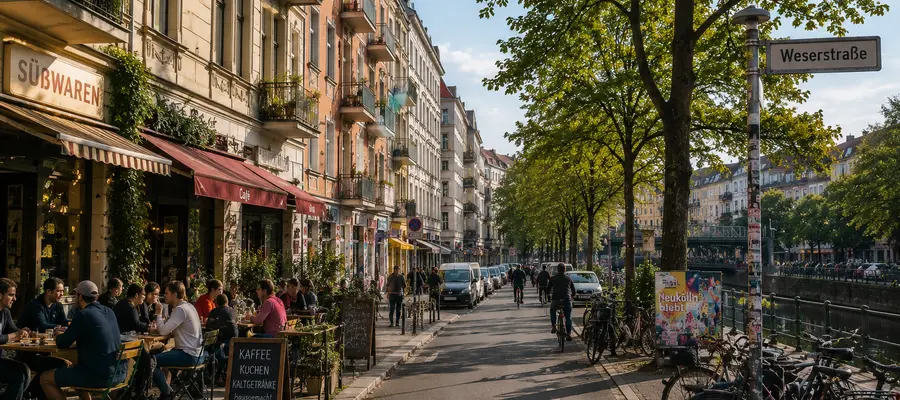
Neukölln stretches from lively northern Kieze to quieter southern areas, so the experience varies significantly by location. Northern Neukölln around Weserstraße, Schillerkiez and the canal is especially popular with students and internationals. The neighborhood has excellent food, independent shops, markets and nightlife, with strong Turkish, Arab and international influences. Further south toward Britz and Buckow, housing becomes quieter and generally more affordable.
+ Often better value than the most central neighborhoods
− Certain major transport nodes are less comfortable at night
Wedding
Diverse · Affordable · Well-connected
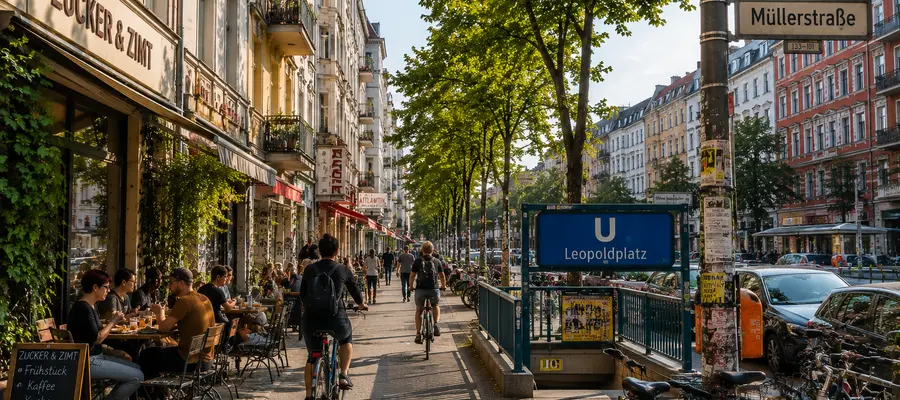
Wedding sits in the northern part of central Berlin and can offer more space for the money than many neighborhoods inside the Ringbahn. Sprengelkiez and the area around the canal have a more attractive residential feel, while Müllerstraße and Leopoldplatz are busier. Charité Virchow-Klinikum and BHT Berlin are major anchors, making Wedding particularly practical for students and medical or applied-sciences professionals.
+ International atmosphere and relatively good value
− Certain areas around major stations are less pleasant at night
Moabit
Residential · Central · Multicultural
Moabit is a surprisingly calm residential area in the geographic center of Berlin, surrounded by the Spree and several canals. Stephankiez and the streets near the river are particularly attractive. TU Berlin is just across the Spree, and U9, S-Bahn and bus connections make commuting straightforward. The neighborhood is multicultural and practical rather than glamorous, which can be a major advantage for everyday life.
+ Very convenient for TU Berlin and Charité
− Some areas around Turmstraße feel less polished
Schöneberg
Cosmopolitan · Inclusive · Balanced
Schöneberg is one of Berlin's best all-round neighborhoods, combining historic Altbau, cafés, restaurants, shopping, parks and excellent transport. Nollendorfplatz and Motzstraße are central to its famous LGBTQ+ history and nightlife, while Akazienkiez and the streets around Eisenacher Straße feel more residential. Southern Schöneberg becomes quieter and more family-oriented as you move toward Tempelhof.
+ Strong international and LGBTQ+ community
− Some central pockets are expensive and busy
Charlottenburg
Elegant · Established · Residential
Charlottenburg offers a very different Berlin from the alternative eastern Kieze: grand Altbau, quiet residential streets, established shops, restaurants, theatres and Kurfürstendamm. TU Berlin, UdK and several international institutions are nearby, while Zoologischer Garten is one of the city's major transport hubs. Savignyplatz and Lietzensee are especially pleasant if you want an established but still central environment.
+ Excellent for TU, UdK and West Berlin offices
− Less alternative nightlife and younger street culture
Tempelhof
Spacious · Green · Relaxed
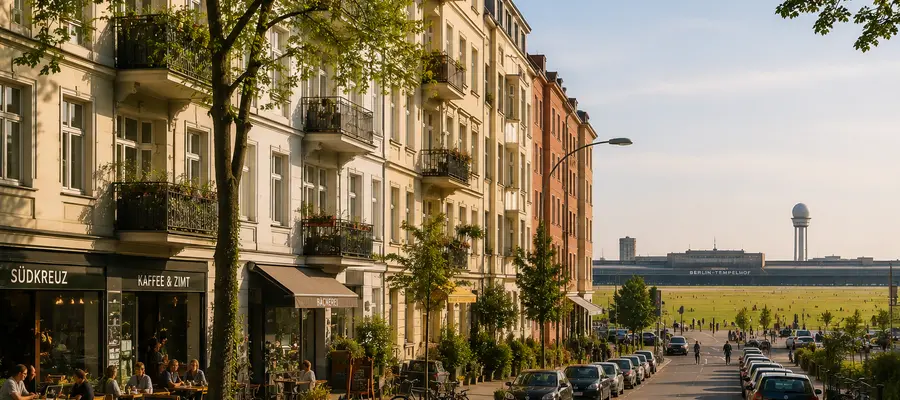
Tempelhof is best known for the enormous Tempelhofer Feld, but the surrounding residential streets have their own identity. The area is generally calmer than neighboring Kreuzberg and Schöneberg, with practical shopping and good U6 and Ringbahn connections. It works well for people who want more space and outdoor access while staying reasonably close to the center.
+ Often better value than nearby Kreuzberg
− Some parts feel more suburban and less central
Steglitz-Zehlendorf
Green · Quiet · Spacious
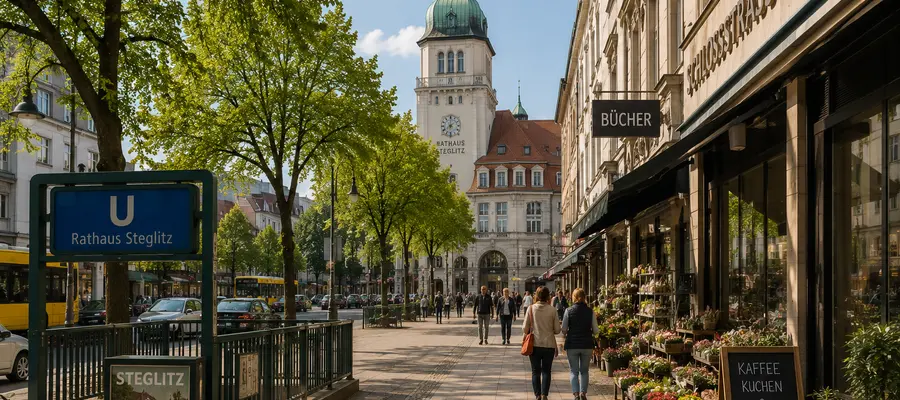
Steglitz-Zehlendorf is one of Berlin's strongest choices for residents who prioritize greenery, space and a quieter daily rhythm. Steglitz has convenient shopping and U-Bahn/S-Bahn connections, while Zehlendorf, Dahlem and Lichterfelde feel greener and more suburban. Freie Universität Berlin is a major advantage for students, and the district offers easy access to forests and lakes.
+ Excellent location for FU Berlin and access to nature
− Less nightlife and fewer international hotspots
Treptow-Köpenick
Green · Water · Relaxed
Treptow-Köpenick combines two very different experiences: Treptow is relatively close to Kreuzberg, Neukölln and Friedrichshain, while Köpenick farther east feels greener, quieter and more local. The district is known for forests, lakes, rivers and large outdoor areas. It can be an excellent choice for families and people who want more space without leaving Berlin, provided a longer commute is acceptable.
+ Often more space for the money than central districts
− Fewer international amenities and nightlife in Köpenick
Start with your budget, commute and lifestyle — then compare available homes across Berlin.
06 — Finding a home
How to search efficiently
1. Set your real budget
Decide what you can comfortably spend on housing, not just the advertised Kaltmiete.
4. Prepare documents first
Being ready means you can react when the right property appears.
2. Choose several neighborhoods
Pick a primary Kiez plus alternatives with a similar atmosphere or commute.
5. Use alerts
Good listings can disappear quickly. Alerts reduce the need to repeatedly search manually.
3. Check the commute
A neighborhood that looks far away can be practical if there is a direct U-Bahn, S-Bahn or tram connection.
6. Apply quickly — but safely
Move fast when a property fits, but never skip basic checks because someone is creating artificial urgency.
Search furnished apartments, studios and rooms from multiple housing providers in one place.
07 — Your application
Documents & SCHUFA
Traditional rentals often involve more paperwork than newcomers expect. Prepare a digital folder before you start viewing.
What is SCHUFA?
SCHUFA is Germany's main credit reporting agency. It maintains payment history tied to your name and address in Germany. Landlords often request a SCHUFA-Bonitätsauskunft — a short report showing whether you have negative entries such as missed payments or defaults. New arrivals frequently have no German credit file yet; that is normal. See our SCHUFA guide for alternatives and how to build your file over time.
Common documents
- Passport or ID
- Residence permit, if applicable
- Employment contract
- Salary statements
- SCHUFA
- Proof of previous rent payments
Students
- Enrollment confirmation
- Scholarship confirmation
- Proof of savings
- Parental guarantee (Bürgschaft)
Self-employed / newcomers
- Tax assessments or business records
- Bank statements
- Proof of income or savings
- Employer or guarantor confirmation
08 — The rental process
From viewing to moving in
The exact process varies by housing type, but the journey usually follows the same basic sequence.
01
Search
Find homes that match your budget, location, type and move-in date.
02
Contact
Send a clear request and ask important questions early.
03
Viewing
Inspect the apartment, building and immediate surroundings.
04
Application
Submit the documents requested by the landlord or provider.
05
Approval
Wait for the landlord or provider to confirm your application.
06
Contract
Read the contract carefully before signing or transferring money.
07
Handover
Document the apartment's condition and receive the keys.
08
Move in
Set up utilities and complete Anmeldung when applicable.
At a viewing, check more than the apartment.
Inside
Light, windows, noise, heating, water pressure, kitchen, bathroom, appliances, storage, internet and overall condition.
Building
Elevator, courtyard, bicycle storage, basement, neighbors, entrance and general maintenance.
Neighborhood
Walk around. Check supermarkets, pharmacies, cafés, parks, public transport and the actual commute at a realistic time of day.
09 — Before you sign
Understand your rental contract.
Contract duration
Unbefristet means unlimited. Befristet means fixed-term. Understand why a contract is fixed-term and what happens at the end.
Rent increases
Look for Staffelmiete (scheduled increases) or Indexmiete (linked to an index). Make sure you understand the future rent, not only today's number.
Subletting
Do not assume that you can sublet. Check the contract and obtain the required permission where applicable.
Furnished rentals
Check exactly what is included, which utilities are included, how the deposit works, the contract duration, termination rules and whether Anmeldung is possible.
10 — After moving
Anmeldung
Anmeldung is the official registration of your residential address in Germany. For many newcomers, it is one of the first important administrative steps after moving.
What you generally need
- Identification
- Registration form
- Wohnungsgeberbestätigung
Ask before signing
If you need Anmeldung, confirm that the accommodation supports registration before you sign or pay. This is particularly important with temporary and furnished housing.
Read our full guide: Anmeldung for expats in Berlin.
11 — Stay safe
How to avoid rental scams
A competitive market can make people rush. Scammers exploit exactly that pressure.
Red flags
- Suspiciously cheap rent
- No viewing is possible
- Landlord claims to be abroad
- Pressure to transfer money immediately
Payment
- Be cautious about unusual payment methods
- Verify who you are paying
- Read the contract before transferring money
- Never let urgency replace basic checks
The golden rule
Move quickly when the opportunity is real. Move carefully when the story doesn't add up.
12 — Housing search
How to find housing in Berlin
Berlin has many housing platforms and communities. Knowing where to look — and how to compare what you find — can make the search much easier.
Long-term flat rentals
Traditional long-term rental platforms for unfurnished and permanent homes in Berlin.
ImmoScout24
Germany's largest property marketplace, with a wide range of long-term rental apartments and homes.
Visit ImmoScout24Immonet
Property portal with long-term rental listings, including apartments and houses across Berlin.
Visit ImmonetImmowelt
German real-estate platform offering long-term rental apartments and residential properties.
Visit ImmoweltKleinanzeigen & private listings
Useful for private offers, rooms and sublets — but listings should be checked carefully.
Facebook Groups
Local housing groups can offer rooms, sublets and private rentals. Because listings are often not independently verified, scam risk can be higher.
Search Facebook GroupsKleinanzeigen
Popular German classifieds platform with private rental offers, rooms and sublets. Always verify the property and landlord before paying.
Visit KleinanzeigenUse with caution
Private listings: Facebook Groups & Kleinanzeigen
Facebook groups and Kleinanzeigen can be useful for finding rooms, sublets and private rental offers, but they require extra caution. Listings and landlords are often not independently verified, so the risk of scams can be higher.
WG, flat shares and roommates
A popular option for students, young professionals and newcomers looking for a room in a shared apartment.
WG-Gesucht
One of Germany's best-known platforms for rooms, shared apartments, flat shares and roommates.
Visit WG-GesuchtStudierendenWERK Berlin
Official student housing portal with information and accommodation options for students in Berlin.
Visit StudierendenWERK BerlinShort–mid-term furnished apartments
Furnished housing platforms that are especially useful for temporary stays, relocations, students and newcomers.
Wunderflats
Furnished apartments for temporary and medium-term stays in Berlin and across Germany.
Visit WunderflatsHousingAnywhere
International platform offering rooms, studios and apartments for medium-term stays.
Visit HousingAnywhereSpacest
Furnished homes and flexible living options for people moving to Berlin and other cities.
Visit SpacestBlueground
Fully furnished apartments with flexible stays, suited to professionals and relocations.
Visit BluegroundAmber
Student accommodation including rooms, shared apartments and studios near universities.
Visit AmberUniplaces
Rooms, studios and apartments for students, expats, professionals and other renters moving to Berlin.
Visit Uniplaces
FlatHunt
Official partnerships
The short–mid-term platforms above — including Wunderflats, HousingAnywhere, Spacest, Blueground, Amber, Uniplaces and others — are official FlatHunt partners. You can search their furnished listings on FlatHunt in one place, compare options safely, and open the original listing when you are ready to apply.
How it works
01
Search once Set your location, budget, dates and housing type.02
Compare options See homes from multiple partner providers together.03
Choose your home Open the original provider listing and continue there.Start your search on FlatHunt
Search partner listings in one place and find your new home in Berlin.
13 — Moving to Berlin
Coming from another country?
Before arrival
- Set a realistic housing budget
- Prepare your application documents
- Arrange temporary accommodation if necessary
- Understand your preferred neighborhoods
- Prepare your move-in date and work/university location
After arrival
- Explore neighborhoods in person
- Attend viewings
- Compare real commute times
- Complete the necessary administration
- Decide where you actually want to live before committing long-term
If you don't know Berlin yet, a furnished home can give you time to learn the city before committing to a long-term neighborhood.
14 — Berlin in one minute
A quick decision guide
Student
Start with Friedrichshain, Kreuzberg, Neukölln, Wedding or Moabit. Prioritize university commute, rent and social life.
Young professional
Compare Mitte, Friedrichshain, Kreuzberg, Schöneberg, Prenzlauer Berg and Charlottenburg based on commute and lifestyle.
Family
Look at Prenzlauer Berg, Pankow, Charlottenburg-Wilmersdorf, Steglitz-Zehlendorf, Tempelhof and Treptow-Köpenick for space, parks and everyday infrastructure.
Nightlife
Friedrichshain, Kreuzberg, Neukölln, Schöneberg and parts of Mitte offer more active evening scenes.
Green space
Consider Steglitz-Zehlendorf, Treptow-Köpenick, Tempelhof, Reinickendorf and Pankow.
Value
Look beyond the most famous central Kieze. Wedding, parts of Moabit, Lichtenberg, Tempelhof, Reinickendorf, Spandau and outer districts can broaden the search.
15 — German rental vocabulary
Berlin housing terms you will see everywhere.
16 — FAQ
Frequently asked questions
Is it difficult to find an apartment in Berlin?
It can be competitive, particularly for reasonably priced homes in popular neighborhoods. Preparation, flexibility and having your documents ready can improve your chances.
How much does rent cost in Berlin?
It depends on neighborhood, size, building, furnishing and contract. Use current FlatHunt listings and market data rather than relying on a single city-wide average.
Is furnished housing more expensive?
Often yes. Furnished housing can cost more but may include furniture, utilities and flexibility, which can be valuable when you have just arrived.
What is a WG?
A shared apartment where residents normally have private bedrooms and share common spaces.
What is Warmmiete?
Kaltmiete plus the operating costs included in the agreement. Electricity and internet may be separate.
Do I need SCHUFA?
Many conventional landlords request it, but newcomers can sometimes provide alternative documentation of financial stability.
Can I rent before arriving in Berlin?
Yes, particularly furnished or professionally managed housing can be suitable for newcomers. Conventional long-term rentals may be harder to secure from abroad.
What is Anmeldung?
Official registration of your residential address in Germany. If you need it, confirm before signing that the accommodation supports registration.
You've got the guide. Now compare real homes by budget, neighborhood, housing type and availability.