Skip to content
FlatHunt Search Granada

Granada · neighbourhood guide

Where to live in Granada: the neighbourhoods compared

Granada is compact, but where you live still shapes your year. The two big variables are hills and campuses. The Albaicín and upper Realejo are beautiful and steep; Centro, Ronda and Zaidín are flat and practical. The University of Granada is spread across several sites, so a flat that is perfect for a Fuentenueva student can mean a long daily trip for someone at Cartuja or the health sciences campus. Start from your timetable, then decide how much noise and how many stairs you will tolerate.

Granada, Spain

Albaicín

Whitewashed lanes, walled cármenes and the best Alhambra views

  • students in the centre
  • couples
  • slow travellers

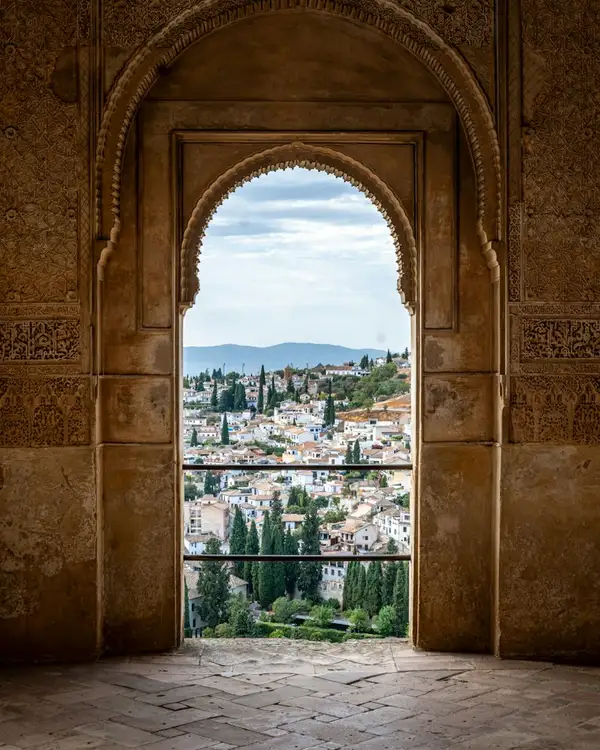
The Albaicín is the reason many people fall for Granada in the first place. Its lanes twist up from Plaza Nueva and the Carrera del Darro towards the Mirador de San Nicolás, where the Alhambra fills the view and, in winter, the snow on Sierra Nevada glows behind it. Housing here is old and irregular: small flats carved out of former townhouses, rooms set around an inner patio, and the occasional carmen, a walled house with its own terraced garden. Expect character rather than square metres.

Day-to-day life takes some planning. Many streets are pedestrian or too narrow for cars, the cobbles are steep and slippery after rain, and the climb home from the centre counts as exercise. Shops are small, so most residents do their bigger food shop down in the city. The municipal minibuses that squeeze through the quarter help, particularly for the upper parts towards San Miguel Alto and the cave houses of Sacromonte. Damp is a common complaint in ground-floor rooms, and winter heating deserves a direct question before you commit.

The payoff is atmosphere. Tea houses line Calle Calderería Nueva, flamenco echoes out of Sacromonte, and the bars of Calle Elvira are at the bottom of the hill. If your lectures are in the centre, at the Law faculty or Translation and Interpreting, the Albaicín works well on foot. If you study at Cartuja or the health sciences campus, the daily commute gets long, and many people in that position choose a flatter area from the neighbourhood guide and keep the Albaicín for evenings. Shared rooms here appear in the Granada room search alongside the rest of the city.

Getting around Municipal minibuses climb from Plaza Nueva and Gran Vía de Colón into the quarter; everything else is on foot.

Search homes in Granada

Realejo

The old Jewish quarter, Campo del Príncipe and painted walls

  • language students
  • Erasmus students
  • young professionals

Realejo climbs gently from Plaza Isabel la Católica and Calle Reyes Católicos up towards the southern flank of the Alhambra hill. This was the Jewish quarter of medieval Granada, and its lower streets still feel like an extension of the centre, while the upper lanes turn steeper and quieter. The neighbourhood's living room is Campo del Príncipe, a long square ringed with terraces that fill up on spring evenings. Look at the walls on the way up: many of the large murals around Realejo are by El Niño de las Pinturas, Granada's best-known street artist.

The housing stock is a mix of renovated period buildings, plain mid-century blocks and a few cármenes near the top. Flats on the lower streets are practical for sharing and usually a short walk from Puerta Real, the Cathedral and the shopping streets. Higher up, rooms can come with terraces and views but also stairs, older wiring and limited heating, so ask questions about all three. Noise is moderate: livelier around Campo del Príncipe, residential almost everywhere else.

A big draw for international arrivals is the Centro de Lenguas Modernas, the University of Granada's language centre, which sits right in Realejo. Spanish-course students and Erasmus newcomers mean that landlords here are used to foreign tenants and semester-length stays. Getting to Fuentenueva or the Camino de Ronda is a comfortable walk across the centre, while Cartuja means a longer trip north. For anyone who wants old-town charm without living on a cobbled staircase, Realejo is the obvious compromise; compare it with the other areas in our Granada neighbourhood overview.

Getting around Walking distance to Puerta Real and Gran Vía de Colón; the Alhambra minibus passes along the edge of the quarter.

Search homes in Granada

Centro

Cathedral, Gran Vía and the shortest walk to anywhere

  • students
  • interns
  • short stays

Centro is the flat, walkable heart of Granada, stretching from Gran Vía de Colón past the Cathedral and Plaza Bib-Rambla to Puerta Real and Calle Recogidas. Almost everything a newcomer needs is here: banks, phone shops, the Mercado de San Agustín, the main shopping streets and a dense grid of tapas bars. It is also where the city's oldest faculties live, including Law in Plaza de la Universidad and Translation and Interpreting on Calle Puentezuelas, so students in those programmes can roll out of bed and be in class within minutes.

Housing is mostly flats above shops in buildings from the nineteenth and early twentieth centuries. Ceilings are high and balconies common, but lifts are not guaranteed and internal rooms facing a light well can be dark. Street noise is the main trade-off: delivery vans in the morning, terraces at night and, during Semana Santa, processions that pass under your window and close streets for hours. Ask which way a bedroom faces before booking if you are a light sleeper.

Living centrally makes the most sense if your classes are in the centre or at Fuentenueva, which is an easy walk west, or if you plan to work and socialise mainly in town. The Metro runs along the Camino de Ronda, a short walk away, and links you with the health sciences campus to the south. For Cartuja, buses up Gran Vía and Avenida de la Constitución are the usual route. Furnished flats in Centro turn up in both the shared rooms and apartments searches.

Getting around Most bus lines meet at Gran Vía de Colón and Puerta Real; the Metro on the Camino de Ronda is a short walk west.

Search homes in Granada

Ronda

Student central: Camino de Ronda and Pedro Antonio de Alarcón

  • students
  • first-time Erasmus
  • budget sharers

Ask a Granada student where they lived in their first year and there is a good chance the answer is Ronda. The district spreads either side of the Camino de Ronda, the long avenue west of the centre, and takes in the streets around Calle Pedro Antonio de Alarcón, universally shortened to Pedro Antonio. The Fuentenueva campus, home to the Faculty of Sciences and the Civil Engineering school, is right here, and the centre is a flat walk away.

The buildings are mostly mid-twentieth-century blocks with lifts, which matters more than it sounds in a city of stairs. Flats tend to be larger and more regular than in the old quarters, with three or four bedrooms, a shared kitchen and sometimes a terrace, which is exactly what landlords letting room by room want. Many owners have rented to students for years and furnish accordingly: a desk, a bed, wardrobe space and not much else. The downside is Pedro Antonio itself. On Thursday, Friday and Saturday nights its bars and late-night spots draw crowds, so a bedroom overlooking it will be loud until very late.

Ronda is practical rather than pretty. Supermarkets, copy shops, cheap menú del día restaurants and gyms are everywhere, and the Metro runs underground beneath the Camino de Ronda, connecting north to the train station area and south to the health sciences campus. For a first semester in Granada, when convenience matters more than views, it is hard to beat. If the room search turns up too many options, start with streets one or two blocks away from Pedro Antonio: you keep the convenience and lose the weekend noise. See all shared options on the Granada rooms page.

Getting around Metro de Granada runs beneath the Camino de Ronda with several stops in the district; frequent buses cross towards the centre.

Search homes in Granada

Zaidín

Local, flat and close to the health sciences campus

  • health sciences students
  • longer stays
  • budget sharers

Zaidín is where a lot of Granada actually lives. The neighbourhood spreads south of the centre in a grid of residential streets, apartment blocks and small plazas, with the Palacio de Deportes and the Nuevo Los Cármenes football stadium on its southern side. There is little here to photograph, and that is part of the appeal: rents are set by locals rather than tourists, bars serve the kind of hearty tapas that out-of-town visitors rarely find, and every block seems to have a fruit shop, a bakery and a pharmacy.

For students in medicine, pharmacy, dentistry or the other health sciences, Zaidín is the natural base. The Health Sciences campus at the Parque Tecnológico de la Salud lies just beyond it, and the Metro runs down the neighbourhood's edge with stops close to the stadium and the campus. Heading the other way, the same line brings you up the Camino de Ronda towards Fuentenueva and the city centre, which makes Zaidín workable even if your faculty is elsewhere.

The housing is mostly built from the 1960s onwards: regular flats, lifts in many buildings, and bedrooms that tend to be roomier than in the old town. Shared flats here often house a mix of Spanish students, young workers and the occasional Erasmus group, so expect a more local daily rhythm. Nightlife means heading into the centre, and the walk back is long enough that many people take the last Metro or a taxi. If quiet streets, space and lower everyday costs outrank atmosphere, Zaidín is worth a serious look; compare it with Ronda and the old quarters in the neighbourhood guide.

Getting around Metro de Granada runs along the neighbourhood's edge towards the Parque Tecnológico de la Salud, plus city buses to Puerta Real.

Search homes in Granada

Beiro

Between the bullring and the climb up to Campus Cartuja

  • Cartuja students
  • quiet sharers
  • interns

Beiro covers the residential streets north of the centre, from the Triunfo gardens and the Hospital Real, the Renaissance building that now houses the university's rectorate, out past the bullring and along Avenida de la Constitución. It is a district of tidy apartment blocks, school runs and neighbourhood bars rather than sights, and it attracts a steady stream of students for one simple reason: it sits at the foot of the hill that leads up to Campus Cartuja.

Cartuja hosts some of the university's largest faculties, including Philosophy and Letters, Economics and Business, Pharmacy, Psychology and Education. Getting there from the Albaicín or the south of the city takes time, while from Beiro it is a walk uphill or a short bus ride. Students who study at Cartuja and live here gain a lot of time each week, and they are still a reasonable walk from Gran Vía and the Cathedral when they want the centre. The train station and the northern stretch of the Metro are on the district's western side, handy for weekend trips to Málaga or Seville.

Flats are generally from the second half of the twentieth century, with lifts, regular layouts and enough bedrooms for comfortable sharing. Avenida de la Constitución is a wide, busy road, so street-facing rooms there can be noisy, while the side streets are calm. Beiro does not have the bar culture of Ronda or the old-world appeal of the Albaicín, but it is pleasant, practical and less contested at the start of term. If Cartuja is on your timetable, put it near the top of your list and check what is available in the Granada room listings.

Getting around City buses run along Avenida de la Constitución and up to Campus Cartuja; the Metro and train station sit on the district's western side.

Search homes in Granada

Choosing an area in Granada

What are the best areas for students in Granada?

Albaicín (whitewashed lanes, walled cármenes and the best alhambra views), Realejo (the old jewish quarter, campo del príncipe and painted walls), Centro (cathedral, gran vía and the shortest walk to anywhere) and Ronda (student central: camino de ronda and pedro antonio de alarcón). Every area above has its own section with transport and what the housing is like.

Found your area? Search Granada

Search 150 homes