
Centro Histórico
Marble streets, a Moorish fortress and Picasso's birthplace
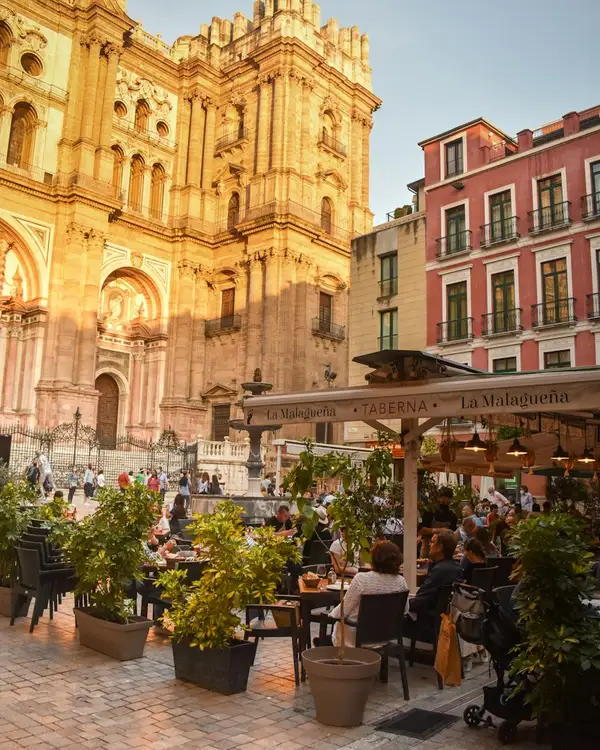
Málaga's historic centre is small enough to cross on foot in no time and dense enough to keep you exploring for months. Calle Larios, paved in polished marble, runs up from the port to Plaza de la Constitución; around it, narrow streets lead to the unfinished cathedral that locals call La Manquita, the Picasso Museum in the Buenavista palace, and Plaza de la Merced, where the painter was born. Above it all, the Alcazaba and the Roman Theatre sit side by side beneath Gibralfaro castle. Near the river, the Mercado de Atarazanas occupies a former Moorish shipyard, entered through an original horseshoe gateway and lit by a huge stained-glass window. At Christmas, Calle Larios hosts a famous light show.
For convenience nothing beats it: the Mercado de Atarazanas for fish and produce, tapas bars on every corner, and the port and Malagueta beach a short stroll away. But the centre has become heavily touristic. Many buildings now hold holiday apartments, cruise passengers fill the streets, and Semana Santa processions and the August Feria bring huge crowds and road closures. Homes are typically in older buildings, some beautifully restored, others small and dark.
Students at the UMA's El Ejido campus, just north of the old town, can walk to class, and the metro now reaches the river edge of the centre for the trip out to Teatinos. Long-stay renters who want a calmer street often drift towards Soho across the Alameda or La Malagueta by the sea, keeping the old town for evenings out rather than everyday life. Lagunillas and El Ejido, just to the north, are less polished but more residential.
Getting around Metro lines 1 and 2 reach the western edge of the old town by the Guadalmedina, with EMT buses along the Alameda Principal and Cercanías trains at Centro-Alameda.