Skip to content
FlatHunt Search Prague

Prague · neighbourhood guide

Prague neighbourhoods: where to live

Prague's numbered districts confuse newcomers at first, since Prague 2, Prague 3 and Prague 7 matter more on a lease than on a map, but the choice usually comes down to a handful of historic quarters within a few metro stops of the centre. Vinohrady and Karlín are polished, Žižkov and Holešovice more characterful, Smíchov and Nové Město practical, and Dejvice academic and green. Below, each area is described honestly: its housing stock, noise, transport links and the people who tend to live there.

Prague, Czechia

Vinohrady

Art Nouveau facades, leafy squares and Prague's classic expat address

  • expats
  • couples
  • young professionals

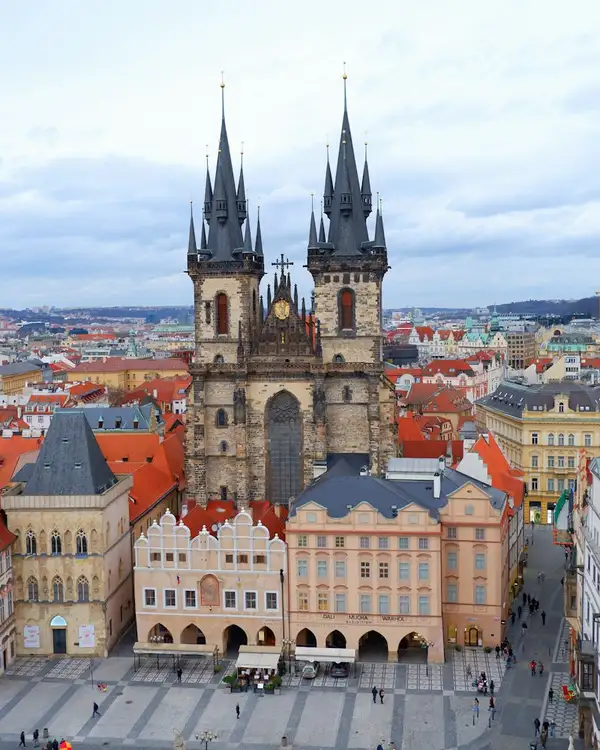
Vinohrady takes its name from the royal vineyards that once covered the hill, and a small vineyard still survives in Havlíčkovy sady, the park around the Grébovka villa. The district itself went up in a rush at the end of the 19th century, which explains its uniform grandeur: block after block of Neo-Renaissance and Art Nouveau apartment houses with ornate facades, courtyard gardens and generous rooms. The twin spires of St Ludmila's Church on Náměstí Míru are the landmark everybody gives directions from.

Life here revolves around squares and parks. Riegrovy sady has a sprawling beer garden and a view across to Prague Castle; Jiřího z Poděbrad hosts a farmers' market beneath Plečnik's striking Church of the Most Sacred Heart of Our Lord; and Mánesova, Korunní and Vinohradská are lined with cafés, bistros and wine bars. It is lively without being rowdy, which is why international residents have favoured it for decades. Flats tend to be large and high-ceilinged, though lifts and modern heating vary from building to building.

Metro A stops at Náměstí Míru, Jiřího z Poděbrad and Flora, and trams along Vinohradská and Korunní run into the centre and out towards the eastern districts. Wenceslas Square and the National Museum are an easy walk downhill. Vinohrady is the default recommendation for expats arriving with a job and for couples who want a central, grown-up neighbourhood; students may find better value next door in Žižkov or further out along line A. Compare apartments for rent in Prague to see what is currently available in Prague 2.

Getting around Metro A at Náměstí Míru, Jiřího z Poděbrad and Flora, plus trams along Vinohradská and Korunní.

Search homes in Prague

Žižkov

Pubs, hills and a TV tower with crawling babies

  • VŠE students
  • pub lovers
  • budget-minded renters

Žižkov has long been known as Prague's rebel district: working-class, proudly independent and said to have more pubs per head than anywhere else in the city. Its streets climb and dip over hills, its apartment blocks are packed tightly together, and its skyline is dominated by the Žižkov Television Tower, with David Černý's giant crawling babies on its sides. On Vítkov hill above, the National Monument and the huge equestrian statue of Jan Žižka, the Hussite general who gave the district its name, look out over the city.

Housing is mostly turn-of-the-century tenements, some beautifully renovated and others still a little tired, plus a scattering of newer infill buildings. That mix means rooms and studios in Žižkov often come at a gentler level than in Vinohrady, though the gap has narrowed. Expect noise from bars and trams on the main streets and plenty of character in the side streets. VŠE's main campus at náměstí Winstona Churchilla sits on the district's western edge, so economics students cluster here, along with musicians, artists and young professionals.

There is no metro station in the middle of Žižkov, but trams along Seifertova and Koněvova run frequently to the main station and the centre, and line A at Jiřího z Poděbrad and Flora is close to its southern edge. Hlavní nádraží is walkable from the western end. Parukářka park has a summer bar with city views, and Riegrovy sady is just across the border in Vinohrady. Žižkov suits students and anyone who enjoys a proper neighbourhood pub culture. See rooms for rent in Prague to find a place in Prague 3.

Getting around Trams along Seifertova and Koněvova, with metro A at Jiřího z Poděbrad and Flora on the district's southern edge.

Search homes in Prague

Karlín

Rebuilt after the 2002 flood into Prague's smartest new quarter

  • young professionals
  • couples
  • cyclists

Karlín was Prague's first suburb outside the city walls, laid out in the early 19th century as a regular grid on the flat land east of the centre. It became an industrial district, then a neglected one, until the 2002 floods left it under water. The rebuilding that followed changed its fortunes completely. Today Karlín is one of the most fashionable addresses in the city, with restored facades, glass offices and some of Prague's best restaurants, bakeries and coffee along Křižíkova and Sokolovská.

Behind the Baroque Invalidovna and around the former Karlín barracks, now a cultural venue with a summer cinema and courtyard bar, new apartment buildings stand beside restored 19th-century blocks. Apartments and studios here are often modern, with lifts, good insulation and sometimes underground parking, which suits professionals working in the offices along Rohanské nábřeží. Forum Karlín, a converted factory hall, hosts big-name concerts. The flat, straight streets also make Karlín one of the easiest Prague districts to get around by bike, a rarity in such a hilly city.

Metro B stops at Florenc, Křižíkova and Invalidovna, Florenc also connects to line C and the main coach station, and trams run along Sokolovská and Křižíkova towards the centre and Holešovice. The Vltava cycle path runs along one side of the district and Vítkov park rises on the other. Karlín suits professionals and couples who want something central and modern, though it can feel expensive and a touch corporate on weekdays. Browse studios for rent in Prague to see Karlín's newer buildings alongside other districts.

Getting around Metro B at Florenc, Křižíkova and Invalidovna, metro C at Florenc, plus trams along Sokolovská and Křižíkova.

Search homes in Prague

Holešovice

Galleries, market halls and the big parks of Prague 7

  • creatives
  • students
  • park lovers

Holešovice sits inside a big loop of the Vltava, and for much of the 20th century it was Prague's industrial and port district. That past shows in its warehouses, market halls and factory buildings, many of them reinvented. The old municipal slaughterhouse is now Prague Market (Pražská tržnice), DOX is a major centre for contemporary art, and Vnitroblock turns a courtyard factory into café, gallery and dance space. The National Gallery's modern collection fills the functionalist Veletržní palác, one of the city's great interwar buildings.

What makes Holešovice work as a place to live is the green space. Letná park, on the plateau above the river, has one of the city's best-known beer gardens and the giant metronome standing where Stalin's statue once loomed, while Stromovka, a former royal game park, offers meadows, ponds and long running loops. Housing is mixed: solid early 20th-century apartment blocks around Letná, new riverside developments near the old port, and some loft conversions. Rooms and apartments here appeal to students and young professionals alike, especially those working in the creative industries.

Metro C stops at Vltavská and Nádraží Holešovice, the latter with a railway station, and trams along Milady Horákové and Dukelských hrdinů link the district with the Old Town, Letná and Dejvice. The neighbourhood feels local and unhurried, with a strong café culture around Letná and far less tourist traffic than the centre. Weekends revolve around markets, galleries and long walks in Stromovka. If that rhythm appeals, compare rooms and furnished apartments in Prague with Prague 7 in mind.

Getting around Metro C at Vltavská and Nádraží Holešovice, plus trams along Milady Horákové and Dukelských hrdinů.

Search homes in Prague

Smíchov

Anděl's shops, Staropramen beer and fast links to everywhere

  • commuters
  • students
  • practical renters

Smíchov grew up on the left bank of the Vltava as an industrial suburb, and its most famous survivor is still brewing: Staropramen, founded in 1869, a short walk from Anděl. The Anděl crossroads is now the district's busy commercial heart, with the Nový Smíchov shopping centre, glass office buildings and a constant procession of trams. Walk a few streets uphill or towards the river and it calms down quickly, with older apartment blocks, small parks and corner pubs that have served the same regulars for years.

Housing is a mix of late 19th-century tenements, interwar blocks on the slopes and new residential projects around Smíchovské nádraží, where a large redevelopment of former railway land is under way. Rooms and studios here are often more affordable than in Prague 2, and the district is popular with students heading to faculties across the river and expats working in Anděl's offices. Kinsky Garden climbs towards Petřín hill for green space, and the Bertramka villa, where Mozart stayed while in Prague, sits on the hillside.

Metro B stops at Anděl and Smíchovské nádraží, regional trains leave from Praha-Smíchov, and trams run straight to Národní třída and Malá Strana. Cross Jiráskův most and you reach the Náplavka riverside with its Saturday market and summer boats. Smíchov is less photogenic than Vinohrady, but for practicality it is hard to beat, and the riverside paths make it pleasant for runners. It suits commuters, students on a budget and anyone who values transport links. Browse studios in Prague to compare Smíchov with the districts across the Vltava.

Getting around Metro B at Anděl and Smíchovské nádraží, regional trains from Praha-Smíchov, and trams to Národní třída and Malá Strana.

Search homes in Prague

Nové Město

Charles IV's New Town: Wenceslas Square, Albertov and the riverbank

  • students
  • short commutes
  • city-centre lovers

Nové Město is new only by Prague standards: Charles IV founded it in 1348 to expand the city, laying out broad market squares that still structure the district today. Wenceslas Square, once the horse market, is its commercial spine, and Karlovo náměstí, the former cattle market, is now a large park-like square lined with university buildings. Between them run streets of 19th- and early 20th-century buildings, from Art Nouveau gems to functionalist department stores, and the passages that cut through entire blocks are a local secret worth learning.

This is also Prague's university quarter in all but name. Charles University's science faculties occupy the hill at Albertov, its First Faculty of Medicine sits around the General University Hospital, and ČVUT has buildings on Karlovo náměstí. Students who rent rooms here can walk to lectures. The southern part, towards Vyšehrad and the Náplavka riverside with its Saturday farmers' market and summer boats, is far more residential than the stretch near Wenceslas Square, where nightclubs and tourist traffic continue late into the night.

Transport is unbeatable: lines A and C meet at Muzeum, A and B at Můstek, line B also stops at Karlovo náměstí and Národní třída, and C at I. P. Pavlova, with trams crossing the district day and night. The Old Town and Vinohrady are both within walking distance. Flats range from grand apartments with original details to compact studios, and street-facing windows on main roads deserve a question about noise before you commit. Look through rooms for rent in Prague if your faculty is in the New Town.

Getting around Metro A and C at Muzeum, A and B at Můstek, B at Karlovo náměstí and Národní třída, C at I. P. Pavlova, plus dense tram routes.

Search homes in Prague

Dejvice

ČVUT's campus, villa streets and line A towards the airport bus

  • ČVUT students
  • families
  • frequent flyers

Dejvice was planned in the 1920s around Vítězné náměstí, a large round square from which avenues radiate outwards, and it still feels orderly and spacious compared with the older inner districts. The Czech Technical University and the University of Chemistry and Technology share a big campus here, so the streets around Technická and Thákurova are full of students at lunchtime. Embassies and villas fill the slopes towards Bubeneč, and the Baba estate, a showcase of 1930s functionalist houses, crowns the hill to the north.

The Hotel International, a towering example of Socialist Realist architecture, adds a dash of 1950s drama, while the gorge of Divoká Šárka offers cliffs, woods and a summer swimming spot within reach of the district. Housing is mostly interwar apartment blocks and villas divided into flats, with some newer buildings further west. Rooms in shared flats are common among ČVUT students, while furnished apartments attract families and diplomats, since several international schools are located in Prague 6. Evenings are quiet, with a few student pubs and local restaurants.

Metro A stops at Hradčanská and Dejvická, the airport bus leaves from Nádraží Veleslavín a few stops further west, and trams from Vítězné náměstí climb to Prague Castle or head to Letná and Holešovice. Můstek and the Old Town are only a few stops away on line A, which makes Dejvice an easy compromise between calm and access. It suits engineering and chemistry students, families and anyone who flies often. Compare rooms near the campus or apartments for rent in Prague in the villa streets of Prague 6.

Getting around Metro A at Hradčanská and Dejvická, trams from Vítězné náměstí, and the airport bus from Nádraží Veleslavín a few stops west.

Search homes in Prague

Choosing an area in Prague

What are the best areas for students in Prague?

Žižkov (pubs, hills and a tv tower with crawling babies), Holešovice (galleries, market halls and the big parks of prague 7), Smíchov (anděl's shops, staropramen beer and fast links to everywhere) and Nové Město (charles iv's new town: wenceslas square, albertov and the riverbank). Every area above has its own section with transport and what the housing is like.

Where do young professionals and expats live in Prague?

Vinohrady (art nouveau facades, leafy squares and prague's classic expat address), Karlín (rebuilt after the 2002 flood into prague's smartest new quarter), Smíchov (anděl's shops, staropramen beer and fast links to everywhere) and Nové Město (charles iv's new town: wenceslas square, albertov and the riverbank). Every area above has its own section with transport and what the housing is like.

Found your area? Search Prague

Search 207 homes