Skip to content
FlatHunt Search Warsaw

Warsaw · neighbourhood guide

Where to live in Warsaw

Warsaw is split into eighteen districts, but most newcomers choose between a handful on either side of the Vistula. The left bank holds the centre, the business towers of Wola and the parks of Mokotów and Żoliborz; the right bank has Praga's surviving pre-war streets. The questions that matter are simple: how close you need to be to the M1 or M2, how much noise you can live with, and whether you prefer old kamienice or new builds. The profiles below answer them district by district.

Warsaw, Poland

Śródmieście

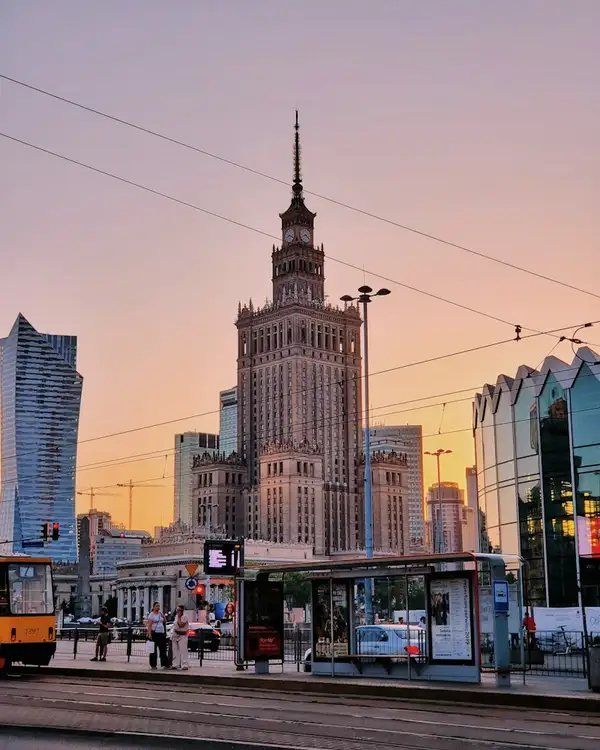
Central Warsaw between the Palace of Culture and Plac Zbawiciela

  • students
  • interns
  • short commutes

Śródmieście is the district on the postcards and the one you will cross most days whether you live there or not. The Palace of Culture and Science still anchors the skyline, with Warszawa Centralna, the Złote Tarasy mall and Centrum metro station at its feet. Head south along Marszałkowska and the architecture switches to the arcaded Socialist Realist blocks of MDM around Plac Konstytucji, then to the tree-lined streets of Hoża, Wilcza and Poznańska, where many of the city's best breakfast places and wine bars have settled.

Housing is a patchwork of surviving or rebuilt kamienice with high ceilings, post-war blocks with surprisingly generous rooms, and new apartment buildings slotted into gaps left by the war. Furnished rooms in shared flats are common, and studios turn up in renovated tenements, often looking onto a courtyard rather than the street, which is worth asking for if you sleep lightly. Traffic on Marszałkowska and Aleje Jerozolimskie never really stops, and warm evenings around Plac Zbawiciela stay loud until late.

What you buy here is time. The Warsaw University of Technology on Plac Politechniki and the University of Warsaw on Krakowskie Przedmieście are a walk or a couple of stops away, and the two metro lines meet at Świętokrzyska, so getting to an office in Mokotów or a tower in Wola is simple. If you want the centre with a little more air, look at Powiśle on the river side in our Warsaw neighbourhood guide, or compare studios in Warsaw across the whole city before deciding.

Getting around M1 at Centrum and Politechnika, M1 and M2 at Świętokrzyska, plus Warszawa Centralna and Warszawa Śródmieście stations for trains.

Search homes in Warsaw

Powiśle

Riverside streets below the university and the Vistula escarpment

  • students
  • young professionals
  • riverside walks

Powiśle simply means 'along the Vistula', and the neighbourhood occupies the low ground between the escarpment of Krakowskie Przedmieście and the river. Not long ago it was a sleepy corner of workshops and old tenements; today it is one of the addresses students and young professionals ask for first. The University of Warsaw Library, with its rooftop garden, the Copernicus Science Centre and the converted Elektrownia Powiśle power station give it a feel somewhere between campus and riverfront.

Streets such as Dobra, Lipowa and Tamka mix pre-war buildings with modest post-war blocks and a growing number of new developments. A room in a shared flat is the realistic option for most people; studios exist but disappear quickly, especially in the weeks before the academic year begins in October. In summer the Vistula boulevards fill with floating bars and people sitting on the steps until late, so a flat facing Wybrzeże Kościuszkowskie can be noisy on warm weekends, while the side streets stay much calmer.

Getting around is easy without the centre's traffic. The M2 stops at Centrum Nauki Kopernik and Nowy Świat-Uniwersytet, suburban trains call at Warszawa Powiśle, and the main University of Warsaw campus is a short climb up the stairs or along Tamka. Praga is a short tram ride across the bridges, and the Old Town is a pleasant walk along the escarpment. If Powiśle is full for your dates, neighbouring Śródmieście usually has more rooms for rent in Warsaw within the same walking radius of the university.

Getting around M2 at Centrum Nauki Kopernik and Nowy Świat-Uniwersytet, suburban trains at Warszawa Powiśle, and trams over the Poniatowski and Śląsko-Dąbrowski bridges.

Search homes in Warsaw

Mokotów

Leafy Stary Mokotów, big parks and the M1 down the middle

  • SGH students
  • office commuters
  • couples

Mokotów covers so much ground that locals split it up in their heads. Stary Mokotów, just south of Plac Unii Lubelskiej, is the classic version: pre-war villas and modernist apartment houses around Rakowiecka, quiet side streets and the open lawns of Pole Mokotowskie, where half the city jogs, picnics and walks its dogs. SGH Warsaw School of Economics stands on Aleja Niepodległości at the edge of the park, which makes this corner a natural choice for its students. Nearby, the former prison on Rakowiecka is now a museum of political prisoners from the communist era.

Further south the picture changes to large estates of 1960s and 1970s bloki, with good shops, schools and green spaces such as Morskie Oko and Park Arkadia. Around Domaniewska and Służewiec lies the office cluster that locals jokingly call 'Mordor', home to many corporate and shared-service jobs; living nearby spares you a famously congested commute. Flats in this part of the district are practical rather than charming, and furnished rooms in well-kept blocks with lifts are easy to find.

The M1 runs straight through, with stations including Pole Mokotowskie, Racławicka, Wierzbno, Wilanowska and Służew, while trams along Puławska carry you into Śródmieście. Evenings are calmer than in the centre, since this is where Warsaw lives rather than parties, though bars and restaurants around Plac Unii and Rakowiecka keep it from feeling sleepy. If you want quiet without a long ride, compare rooms for rent in Warsaw along the southern stretch of the M1 and check how far each one is from a station.

Getting around M1 at Pole Mokotowskie, Racławicka, Wierzbno, Wilanowska and Służew, with trams along Puławska towards the centre.

Search homes in Warsaw

Wola

Glass towers, reborn factories and new flats west of the centre

  • young professionals
  • new-build fans
  • remote workers

If any Warsaw district deserves a construction crane on its coat of arms, it is Wola. The old industrial quarter west of the centre has become the city's main business area, with towers such as Varso and Warsaw Spire clustered around Rondo Daszyńskiego. Between them, brick factories have been reborn as food halls, offices and cinemas, Fabryka Norblina on Żelazna being the best-known example, and whole streets of residential buildings have appeared where warehouses and tram depots used to stand.

That makes Wola one of the better hunting grounds for studios and newer flats with lifts, balconies and modern kitchens, often furnished for rental from day one. Interiors tend to be neutral and practical, which suits a year-long stay better than a weekend. Pockets of older housing remain, including post-war estates around Młynów and Koło. The district also carries some of the city's heaviest history: the Warsaw Rising Museum is here, and memorials on many street corners mark the 1944 massacre of Wola's civilians, which gives the area far more depth than its office-park image suggests.

The M2 serves Rondo Daszyńskiego, Płocka, Młynów and Księcia Janusza, and trams along Wolska and Górczewska head straight for the centre. Plenty of residents walk to work, and students can reach Plac Politechniki or the University of Warsaw by metro without changing lines more than once. Weekends are quieter than in Śródmieście, though the restaurants at Fabryka Norblina and around Hala Mirowska draw a crowd. Browse studios for rent in Warsaw to see the newer buildings, many of them a short walk from an M2 station.

Getting around M2 at Rondo Daszyńskiego, Płocka, Młynów and Księcia Janusza, plus trams along Wolska and Górczewska.

Search homes in Warsaw

Ochota

Calm streets and science campuses just south-west of the centre

  • medical students
  • science students
  • quiet seekers

Ask Warsaw residents where to live calmly without leaving the centre's orbit and Ochota comes up quickly. Around Plac Narutowicza, watched over by the domed Church of St James, and along Grójecka, the streets keep a solid stock of pre-war and interwar apartment houses. Kolonia Staszica, a small quarter of interwar villas and gardens, feels almost suburban, and the open fields of Pole Mokotowskie are a short walk east. Post-war estates fill much of the rest, tidy, green and unremarkable in the best way. Daily shopping revolves around Grójecka and the market hall at Banacha, where stalls sell vegetables, cheese and flowers.

Ochota is also an academic district. The University of Warsaw has a science campus here, with physics and chemistry on Pasteura, and the Medical University of Warsaw's Banacha campus sits alongside the University Clinical Centre. That brings a steady population of students, researchers and young doctors, so furnished rooms in shared flats are common and landlords are used to academic-year contracts. Evenings are low-key: local cafés and a few bars rather than a nightlife strip, which is exactly what many residents want.

Ochota has no metro station of its own, but it doesn't feel cut off. Trams along Grójecka, Aleje Jerozolimskie and through Plac Narutowicza reach the centre quickly, and Warszawa Ochota and Warszawa Zachodnia stations connect to suburban, regional and long-distance trains. For medical and science students it is often the most sensible base in the city. Compare rooms for rent in Warsaw near the Banacha campus, or read the neighbourhood guide to weigh Ochota against Mokotów next door.

Getting around No metro of its own: trams along Grójecka and Aleje Jerozolimskie and through Plac Narutowicza, plus Warszawa Ochota and Warszawa Zachodnia stations.

Search homes in Warsaw

Praga Północ

Pre-war courtyards and creative spaces on the Vistula's right bank

  • creatives
  • budget-conscious renters
  • history lovers

Cross the river from the Old Town and Warsaw suddenly looks older. Praga Północ escaped the worst of the wartime destruction that flattened the left bank, so streets such as Ząbkowska, Brzeska and Targowa still have rows of pre-war kamienice, some with small Marian shrines in their courtyards. Film crews come here when they need authentic old Warsaw, and for years artists and musicians followed, drawn by large studios, low expectations and a neighbourhood that felt nothing like the polished centre.

Today the district is changing fast. The Koneser complex, a former vodka distillery now home to the Polish Vodka Museum, offices and restaurants, set off a wave of renovation, and new buildings keep appearing around Dworzec Wileński. Many older flats are still waiting their turn, so standards vary widely: a beautifully restored loft and a tired room in an unrenovated building can share a staircase. Study the photos, ask about heating and when the flat was last renovated, and expect some streets to feel edgy at night, though less so each year.

The M2 reaches Dworzec Wileński and Szwedzka, putting Śródmieście a few stops away, and trams cross the Śląsko-Dąbrowski bridge towards the Old Town. Praski Park and the Warsaw Zoo line the riverside edge, and Bazar Różyckiego, one of the city's oldest markets, survives on Targowa. Praga suits people who prefer a neighbourhood with stories over one with polish, and it is popular with students on a tighter budget. If you would rather start somewhere central, our guide to Warsaw neighbourhoods compares both banks of the river.

Getting around M2 at Dworzec Wileński and Szwedzka, trams along Targowa and over the Śląsko-Dąbrowski bridge, and regional trains from Warszawa Wileńska.

Search homes in Warsaw

Żoliborz

Interwar villas, green squares and Warsaw's calmest streets

  • families
  • remote workers
  • quiet seekers

Żoliborz grew mostly between the wars, when architects and housing cooperatives set out to build a district that was healthy, green and orderly, and it still feels that way. Streets radiate from Plac Wilsona; villas and low modernist apartment houses hide behind gardens in Żoliborz Oficerski and Dziennikarski; and the Warsaw Housing Cooperative estates show early social housing at its most humane. Even the name is gentle, borrowed from the French joli bord, a 'beautiful embankment' above the Vistula.

The southern end is dominated by the Citadel, a 19th-century Russian fortress whose walls now enclose museums, while Park Żeromskiego and the lagoon at Kępa Potocka give runners and dog walkers plenty of room. Supply is limited because many residents stay for decades, so furnished rooms tend to appear in older cooperative flats, with studios more likely in newer buildings towards the district's southern edge. Flats are often bright and well proportioned, and the neighbourhood atmosphere is closer to a small town than a capital. Streets are lined with old trees, and many buildings have small front gardens looked after by the residents themselves.

The M1 stops at Plac Wilsona and Marymont, so Centrum is only a few stations away, and trams along Mickiewicza and Słowackiego cover the rest. Nightlife is limited to a handful of restaurants and bars around Plac Wilsona and Krasińskiego, which is precisely the point for families, master's students who want to concentrate and remote workers who value a quiet desk. Compare rooms for rent in Warsaw along the northern M1 if Żoliborz itself is fully booked for your dates.

Getting around M1 at Plac Wilsona and Marymont, with trams along Mickiewicza and Słowackiego towards the centre.

Search homes in Warsaw

Choosing an area in Warsaw

What are the best areas for students in Warsaw?

Śródmieście (central warsaw between the palace of culture and plac zbawiciela), Powiśle (riverside streets below the university and the vistula escarpment), Mokotów (leafy stary mokotów, big parks and the m1 down the middle) and Ochota (calm streets and science campuses just south-west of the centre). Every area above has its own section with transport and what the housing is like.

Where do young professionals and expats live in Warsaw?

Śródmieście (central warsaw between the palace of culture and plac zbawiciela), Powiśle (riverside streets below the university and the vistula escarpment), Mokotów (leafy stary mokotów, big parks and the m1 down the middle) and Wola (glass towers, reborn factories and new flats west of the centre). Every area above has its own section with transport and what the housing is like.

Which parts of Warsaw are quieter or good for families?

Ochota (calm streets and science campuses just south-west of the centre) and Żoliborz (interwar villas, green squares and warsaw's calmest streets). Every area above has its own section with transport and what the housing is like.

Found your area? Search Warsaw

Search 682 homes